Process

Back when I was the editor of a regional lifestyle magazine, I discovered that one of the photographers we worked with had a bachelor’s degree in music and that he had once worked as a professional musician. In her former career, an interior designer who was a consultant for the magazine had been a sought-after portrait photographer. Our creative director, a skilled graphic designer, had a side gig working as a comic book artist.
The writers I worked with were no different. One freelancer was an accomplished painter. Another made jewelry. A writer who was also the author of several books used to knit elegant sweaters and scarves in her spare time. Nearly every creative professional I met at that job seemed to possess talent and inspiration that allowed them to excel at more than one type of imaginative endeavor.
This inclination has also been seen in a number of famous writers. Sylvia Plath created works in oil, pen and ink, and collage. William S. Burroughs was known for his “gunshot” paintings. Lewis Carol was a talented photographer. Throughout his life, Henry Miller created more than two-thousand watercolors. Drawings and paintings made by e.e. cummings were frequently shown at galleries in New York.
Jack Kerouac, Mark Twain, Rudyard Kipling, Kurt Vonnegut, Elizabeth Barret Browning, and George Bernard Shaw were all known for their skills as visual artists.
Although I hadn’t thought about it much before working with a large group of creative people, this predisposition also applies to myself. In addition to writing, I paint with watercolors and sew some of my own clothes. I’m more or less addicted to embroidery.
I’ve found that the creative projects I take on that are not writing-related often help me find solutions when writer’s block strikes. Painting has helped me come up with new story ideas. Learning new creative skills has also helped me write more realistic characters. A pottery class I took last winter with my daughter made it possible for me to better develop a character in the novel I’m working on who is a professional potter.
For years, I’d wondered why so many writers and artists tend to be drawn to more than one type of creative pursuit, and why engaging in more than one kind of imaginative project seems to boost one’s overall creative abilities. The answer has to do with the way creative thinking works in the brain.
In a 1997 interview with Wired magazine, Steve Jobs, co-founder and former CEO of Apple, said that “Creativity is just connecting things.” It turns out that he was right.
In their 2015 book, Wired to Create, authors Scott Barry Kaufman and Carolyn Gregoire write that creativity is a complex process that requires the interaction and collaboration of multiple parts of the brain, some of which don’t typically work cooperatively in the brains of non-creative people.
According to Kaufman and Gregoire, in order to write a story or compose a concerto, the brain must work to engage and connect memories, physical motor skills, emotions, critical thinking skills, imagination, analytical aptitude, empathy, planning skills, and the ability to sort and ignore irrelevant information, among other cognitive processes.
The science behind […]
Read More
Since having my first novel published over a decade ago, I have received more writing advice than I can remember. I’ve crumpled some of that advice into hundreds of paper balls while the rest lives in three-ring notebooks flagged with colorful Post-it notes.
The difficult thing about advice is that it’s almost always contradictory. To prologue or not to prologue, that is the question.
Therefore, deciding what works best can only be determined after much trial and error. Advice can also be finicky, so I’m careful what I throw out. What doesn’t work on one project might work better on the next.
Some of the most contradictory advice I have received has come in terms of how to structure a chapter. The following three methods have made it into my 3-ring notebook:
Read More
I lost a beloved aunt during the pandemic, not from Covid itself (though it kept me from attending her bedside), but from a galloping neurologic illness. Later, when things opened up to the point her husband could conduct a celebration of life, I was honored to be asked to help eulogize her.
How do you condense the essence of a person into a few short minutes that will hopefully promote catharsis and healing in yourself and your fellow mourners?
While other eulogists spoke to my aunt’s professional accomplishments (considerable) and her social outreach (intergalactic), I was the relative who had known her the longest. I decided my role was to describe the arc of her larger life. Also, to make clear that the vital, conscientious and fiercely loving woman we all knew had been visible from her earliest years.
An Intersection with Fiction
Around the same time period, I was drafting a holiday romance that required me to level-up my characterization abilities, and it wasn’t going well.
Someone once said that there are only two major plot constructs in fiction: either a person goes on a journey or a stranger comes to town. Well, I realized that to that point, all the fiction I had published dealt with people on the move.
My first book involved a stowaway and an athlete-turned-tour guide who met on a cross-continental bus journey. The second, an employee on a compulsory business trip in Jamaica. My most recent, a woman who’d gone deep undercover, so that her every possession had been curated to hide her true identity.
This time around, however, I was bringing my heroine back to the Colorado location she had fled some five years previously. I had an entire small town to terraform and populate, plus the hero’s ranch to create and imbue with familial backstory. And all this vast white canvas was intimidating to the point of paralysis, mostly because I still didn’t have a handle on my main character. Should I craft a landscape to set her in, and see how that shaped her character, or should I do the reverse?
I really couldn’t see the path forward, and on top of my pandemic-engendered writing rustiness, it just all felt overwhelming.
Collision of Sentiment and the Novella
But what are eulogies if not, in essence, a character sketch, and the stories I chose to tell about my aunt, the highlight reels of her life where it intersected with mine? And so, somehow, with my writing and the celebration occurring in synchrony, glimmers of a useful characterization progress began to reveal themselves.
One universally resonant anecdote regarding my aunt had to do with her amazing hospitality skills. Nearly every year, she’d invite family and friends to a Christmas holiday feast. You’d enter an immaculate house—often freshly painted for the occasion—that was filled with delicious aromas, the buzz of happy conversation, and laughter. After an incredible meal, to which you were allowed to contribute a side dish—more to appease your sense of responsibility and allow you to feel comfortable than because she actually wanted help—she’d send you home with a platter of dessert she’d spent weeks making, though she never ate it herself.
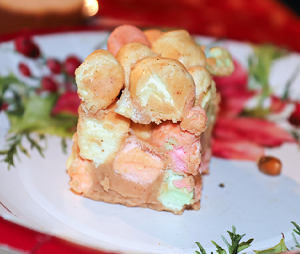
Are you familiar with confetti squares? […]
Read More
There are thousands of posts out there, including a few written by yours truly, on how to market your book. Marketing isn’t a dirty word; it’s just the process of helping people who might want to read your book find your book. There are already more books in the world than any of us could possibly read, with more published every day. So anything you can do to get your book visibility, to make readers aware that it’s out there, that’s a necessary part of the process.
And there’s one marketing tool that every single book has. Yes, yours too. Doesn’t matter whether the book is a classic or a current lead title for a Big Five publisher or a self-published book with no publicity or even a book you haven’t finished writing yet. It costs no money and has no opportunity cost. You only get one, but one should be all you need.
Are you ready to find out what this magical marketing tool is?
It’s your book’s title.
Think about it. Titles are tough, yes, and a good one is no guarantee of success. Not all bestsellers have good titles and a good title doesn’t guarantee a bestseller. But the right one can take your book to the next level. It’s worth spending some time on.
Let’s look at the three most important things your title should do in order to function as a powerful marketing tool:
Describe. Yes, yes, I know. Describing your book is impossible to do in a paragraph, let alone a sentence, let alone a phrase. So there’s no way everything about your book goes into your title. But some level of description is, at core, what we’re all trying to do with a book title. What is your reader going to be reading about? Sometimes one word is enough (Circe, Yellowface) and sometimes more words are needed (Lessons in Chemistry, The Seven Husbands of Evelyn Hugo) but a clue to the content is something every good book title needs.
Associate. Because you get so few words in a title, making them count sometimes means relying on the ones people have existing associations with. This is why approximately 83 gazillion books of the past decade have the word “Paris” in them; a whole lot of people already have thoughts about Paris, and most of those thoughts are positive. If you can incorporate a word that resonates with your potential reader, especially if it’s also descriptive of your book’s content, go for it.
Intrigue. Some book titles work by puzzling the reader. Who is the “you” and who is the “I” and what are the questions in Rebecca Makkai’s I Have Some Questions For You? What in the world happened to Jennette McCurdy for her to publicly declare I’m Glad My Mom Died? Is there literally a support group for horror’s “Final Girls” in Grady Hendrix’s The Final Girl Support Group? Not every book can knock it out of the park like these examples, but a little incongruity or mystery can be just enough to entice a potential reader to look for more information.
Q: How does your book’s title stand up against this test? Does the title do everything you want it to do?
Read More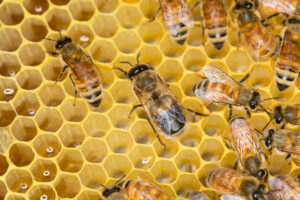
When a beekeeper opens a hive, an intense moment of sensory magic follows. Bees rise from the hive and saturate the air with a gentle, but penetrating hum. Imagine being surrounded by a powerful Om that seems to come from inside your own head as the vibrations resonate in the tiny bones in your ears.
A warm, humid aroma of honey and beeswax fills your sinuses.
As a backyard beekeeper, I always looked forward to that Zen-like moment of calm. I approached my hives with giddiness, anxious for the contact high of being among the bees.
Several years ago, on a perfect August day, I went out to check on my hive. Something felt off. The air was too still. Ordinarily, dozens of bees would have been flying in and out of the hive, the foragers returning home loaded down with bright yellow pollen stuffed into the pollen baskets on their rear legs.
But that day, the hive was eerily quiet.
My heart rate ratcheted up as I got closer. I think my body understood before my brain did. Then I saw it. Outside the hive lay a pile of 40,000 honey bees. My bees, all of them dead.
I built that box hive with my own hands. I had studied and worked hard to care for these creatures. Thoughts raced through my mind. What had I done wrong?
It couldn’t have been Colony Collapse Disorder, a mysterious syndrome in which bees fly off and never return. My bees came home.
It couldn’t have been a parasite, a fungal, bacterial, or viral infection, because an infection would have taken time to work through the hive. My bees died in a pile. All at once. In my yard.
I soon realized the bees had been poisoned by one of my neighbors who applied a toxic lawn chemical. At first, I was furious. I had no idea who had used the lawn product so I looked at all my neighbors with suspicion. Was it YOU?
After a few days of side-eyeing everyone on my street and scrutinizing their impeccably manicured lawns, I came to realize the problem wasn’t that someone used a toxic chemical on their lawn. The problem was that these chemicals were legal and widely available. Although most other countries have outlawed these toxins, our government refuses to stand between landowners and their perfect green lawns.
As I stared at my silent hive and the pile of corpses, I wondered what was happening to the native pollinators. To the wild bees, the butterflies, wasps, and yellowjackets. Were they dying too?
What if they all died?
What if all our pollinators died?
That what-if question haunted me. What would our world look like without pollinators? What would happen to our agricultural system? Our food security? How would it impact our economy? Global politics? One-third of the food humans consume is the result of pollinators. If we lost a third of the food in a world that already struggles with food insecurity, who would claim the remaining food? Who would go hungry? How would it exacerbate the existing inequalities in the world? Would the economy survive? Would nations go to war?
These questions kept me up at night. What if? What if? What if?
As these questions buzzed around in my head, a story idea crystallized about […]
Read More
My youngest left for college this month and we are officially empty nesters. It’s a crazy time, both exciting and bittersweet. I wander around the house, peeking in empty bedrooms, folding shirts just so I can smell them, wondering how a home that a few weeks ago felt so loud and overcrowded can suddenly be so quiet.
My writing is quiet too. I stare at the page, waiting for the words to come, but they are hiding just out of reach. I can almost see them, shimmering in the space in front of me, dreamlike and perfect in a way they never stay when I capture them.
But for now the page, like my house, is still.
A friend called me last night to check in. She asked how I was doing, reminded me it was ok to mourn, for a little bit, the end of this stage of life that has been my focus for 22 years. Reminded me too that people had been in my space, both physical and mental, for a very long time, and it would take some readjusting to get used to the change.
“Don’t think of it as empty,” she said. “Think of it as waiting to be filled with new adventures and things you love.”
A tiny shift, yet it helped, both for life and for writing. Until I can catch and keep those shimmery words that dance beyond my grasp, how do I want to curate my mental space? And what adventures do I want to have on the page when the words return?
After my friend’s call, I made a list. Two lists, actually. A life list, and a writing list, both full of ideas and adventures to look forward to and to stretch me. I’m sharing the writing list here.
Read More
The first traditionally published book I wrote happened in small increments of time. Ten minutes here. Fifteen minutes there. If I was really lucky, I could snag a whole half-hour to myself.
That’s what it felt like: snagging moments as they flew by.
At the time I had a newborn, twin three-year-olds, a five-year-old, a six-year-old, and an eight-year-old and I worked a full-time job. Time was a construct of the imagination. I could barely boil tea or brush my hair or visit the bathroom without a sweet little boy calling for Mama.
But I had a story threatening to burst me.
So while my children bathed, watched by their father, I shut my bedroom door, set a timer for ten minutes, and wrote furiously, words splitting out of me.
It was not a pretty story when it was all said and done. But it was a story. The bones. And I had a feeling they were good. And that meant I could turn them into something better.
I tell you all this to say it’s possible to write a book in ten or fifteen minutes a day. Sure, it may take us a year or two to get that first draft down, but the important thing is—it’s a draft. It’s something we can work with. And words on a page are better than words trapped in our brain, clamoring to get out. (Ironically, the voice begging me to write this story belonged to another boy, as if I didn’t have enough of those asking for things!)
Not many of us have hours at our disposal to write on our works-in-progress. We have full-time jobs or family demands or life crises to manage. If we wait until we have hours at our disposal to write on our work-in-progress, we’ll never actually make progress. We might as well call it a work-in-stagnation. Or an idea.
So how do we use those small pockets of time available to us? And where can we find them?
First, let’s start with where to find them. I have three suggestions—but I bet you can come up with more.
1. Use commute time to write.
I have several friends who use dictation while walking their dogs, driving places, or traveling. If you find it too hard to actually write scenes or sentences that make you proud to be a writer, try outlining a scene or creating a character or dictating descriptions of places or people you see. All that can be used later.
2. Trade social media time for writing time.
Many of us spend much more time scrolling through social media than we even realize. Schedule the time you’ll spend on those platforms, instead of letting them suck you in indefinitely. Put limits on your devices. Enlist a friend or partner to hold you accountable. Take back the time and write.
3. Use your lunch breaks.
I’m all for mindful eating, but sometimes you have to take that ten or fifteen minutes where you can. Eat while writing. Or wait until you’re done eating. Close your office door (if you have one) or hide behind some earbuds and write.
Be creative in looking for other pockets of time.
Now, how can we use those ten or fifteen minutes so they yield what we’re looking for: words, progress, and brilliance (maybe)?
Set a timer […]
Read More
photo adapted / Horia Varlan
Honoring the burst of back-to-school spirit that always invigorates me at this time of year, I thought I’d share this highlight reel of the things I say most often in my manuscript evaluations. They may sound obvious, but it’s easy to overlook foundational skills as word count accumulates. These can—and should—be addressed in a self-edit before submitting your manuscript for developmental help. Let’s see if any of them sound familiar to you.
Nothing is more disorienting to a reader than not knowing where the action is taking place, when it is taking place, and whose perspective is delivering the story. Excuses for burying this information run the gamut from simple forgetting to an attempt to be highbrow or artsy. But in this WU post I wrote, using examples from Ann Patchett’s The Dutch House, one can see that it’s not beneath an author of many bestselling literary novels to do so. The answers to who, when, and where—placed right up front—create the most basic context for following the story’s events.
While drafting your story, rather than ask, “What will happen to my protagonist next,” ask instead, “What will my protagonist do next?”
This one shift will address a host of interrelated problems. It will energize the scene with your character’s agency. It will organize the scene, because now you have a goal that can be complicated. Because the character will want to prevail despite these complications, the stakes for achieving that goal will become apparent—and “the thrill of victory and the agony of defeat” (to borrow from ABC sports) will be more profoundly moving than any reaction you can describe.
Instead of telling the story, think about building it. Scenes driven by a point-of-view character’s goal are your building blocks.
While drafting scenes, writers (at least those who understand that last point about scene goals) will utilize the other characters in the scene to cause problems for the protagonist as he tries to achieve his goal. That’s great—but don’t stop there. No one wants to be thought of as a tool in someone else’s life. If you asked her why she’s in the scene, what would she say? Ascertain her motivation. Think beyond “because she’s nosy and wants to find out the scoop.” If she is nosy, why? How did she become that way? What exactly is she hoping to find out, and how does that complicate the protagonist’s scene goal? What are the stakes if this secondary character can’t find out what she needs to know? All of that material may not end up on the page, but your commitment to getting to know your major secondary characters will help them appear more relatable and nuanced.
In this interview, Brett Goldstein, a writer and actor in the Apple+ TV show Ted Lasso, says, “You have to write all of your characters with love, even those who deliver only one line.” This became both a joy and a challenge for the Lasso writers as […]
Read More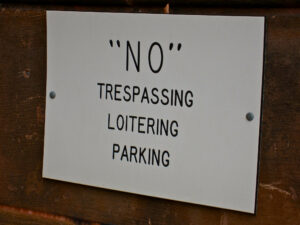
I grew up in a small town that contained the following highlights: Blockbuster Video, Loard’s Ice Cream, Nation’s Hamburgers, and Safeway. A library, a drug store, as well as a bookstore and community center. A beautiful old movie theater with a domed, celestial ceiling and lumpy velvet seats that smelled weird. That was about it. As teenagers, unless we hopped in the car and headed west, we had to work hard to find local entertainment.
Therefore, on weekends, I often found myself hanging out with my best pals in the Safeway parking lot. Literally in the parking lot. To this day, I don’t know why this seemed like fun, this loitering. We must have been waiting for something to happen. Or maybe we weren’t waiting for something to happen. Maybe we were waiting for anything to happen.
I don’t remember being bored. I remember hanging out with my best pals–friends I still hold dear nearly forty years later. In the Safeway parking lot, free from eavesdropping parents and irritating siblings, we did the most low-tech of things: talked, laughed, and gossiped.
How dull our lives must have looked to others. Perhaps we looked suspicious too. After all, we were loitering. And as many a sign will remind us, loiterers are rarely a welcome sight. But the simplicity of that activity, the absence of technology, movies, music, and alcohol, allowed room for us to connect in meaningful ways. Even if it looked really boring.
This summer, during my break from teaching, my life must have looked just as boring. The day after school got out, I tackled the still-major revisions suggested by my editor. For the next two months, I revised and revised and revised, and when I wasn’t revising, I was thinking about the revisions, puzzling over how to pull off the changes my editor had suggested. And when I wasn’t revising or puzzling, I was quietly and privately panicking that I wasn’t going to be able to pull off the revisions my editor was expecting. That’s it. That was my summer. To a casual observer it would have been as exciting as watching four teenagers hang out in the Safeway parking lot.
Okay, sure, I did do a few other things this summer. I ate significant amounts of watermelon. I occasionally showered. Less occasionally, I did ten pushups. I stood in my back yard, watching my May/June mason bees and, later, my July/August leafcutter bees, laying eggs and building little capsules for their babies in their bee chalet. I lured crows into our backyard with stale crackers. I considered sorting and refolding the old sheets and towels in the linen closet. I ordered mattress protectors, surge protectors and daughter protectors, plus a ramen-in-the-microwave cooker for my sweetie who started college in August (two time zones away). I enjoyed walks to the neighborhood brewery for a cider with the husband and the dog. I caught up with dear, neglected friends. I went head-to-head with my dad on the daily Wordle.
But mostly I loitered in the Safeway parking lot of my story. Not actively loading items into my shopping cart. Not […]
Read More
Three years ago, in mid-August, my first historical novel debuted in the summer of lockdown. The launch situation was far from ideal, and those of us who were published that summer did the best we could with bookshops closed and no in-person events. When August 2021 rolled around and my second novel was released along with the paperback version of the first, my expectations weren’t high. Another eerily quiet summer, another novel comes out into the world with a whisper.
The summers of 2020, ‘21, and ‘22 were all about book release and promotion, so there was some structure to my writing/author life. It’s late August 2023 as I write this. Things are better now for publishing authors, and though I don’t have a novel in the pipeline, through two launches I’ve developed a community of fellow writers and supportive readers. I’m celebrating friends’ book launches and live events, and sometimes speaking, mentoring, and teaching.
While my first two novels were coming out into the world, I found it tough to begin a new draft. Here, I should qualify that when my manuscript sold in a two-book deal, I had a completed draft of the second and it was a stand-alone sequel. I have real admiration for authors who crank out a book a year. While promoting a recently published book, I needed to keep that set of characters fresh in my head so I could talk about them when questions were asked (even though all authors answer the same questions multiple times). We hone our sound bites, quips, our interjections of humor, and (especially with historical fiction) we can recall historical dates and events at the drop of a hat. It’s tricky, when you’re interviewed for 45 seconds on live radio and the DJ poses questions like: So, who stars in the movie? The clock is ticking while you hem and haw, trying to remember the names of any under-thirty actors. So I was reluctant to try to bring a new set of characters to life. Plus, the pandemic sucked the creativity from my soul for a while.
For the past year, I’ve been working on a third manuscript on and off. The most recent (fifth) draft is, at present, with an editor. So there’s that waiting-to-hear-comments time, which I am now really good at enduring, as well as the sense of relief that comes with completing specific goals. The fine-tuning of this novel has been slow going, and that’s fine. There’s no deadline. I’m surprised by how nice I’ve been about it—to myself, I mean. I’ve felt fortunate that I’ve been able to move at my own pace with this project. While I work well under the pressure of a deadline, I know now that I couldn’t have written this book in one year. The story needed time to germinate and develop. I like to leave room for historical research to shape my plot, and for my characters to surprise me. Don’t get me wrong, I do still feel a strong drive to get this novel to the finish line. I’ve learned—with no deadline—what my own writing process is, and also, that I need to trust it. That’s worth something, isn’t it?
When asked to choose, I’ve considered myself a hybrid Plotter/Pantser. […]
Read More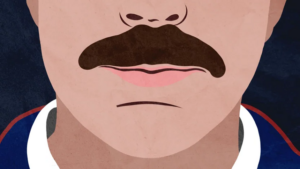
The Apple TV show Ted Lasso has been mentioned here before, most notably in this post by former WU regular Bill Ferris, who spotlighted the show two years ago. But staying true to my lifelong habit of being woefully behind the times (I still haven’t gotten around to seeing that new Kevin Costner movie, Dances with Wolves), I was late to the party in joining the sizable fandom of All Things Lasso.
I’d been hearing about Ted Lasso for a while, but had been dragging my feet about checking the show out. For one thing, it appeared to be about sports. I not only don’t care about sports; I actively dislike them – a holdover from my teenage days when I resented all the attention that high school athletes received, while musicians and other artists were largely ignored. (Yes, I am an attention slut – why do you ask?) It also sounded like a pretty goofy fish-out-of-water premise: an American college football coach who suddenly finds himself transported across the Atlantic to coach a professional English soccer team. So it seemed the level of suspension of disbelief the show would require was already taking this into shark-jumping territory. And then there was that ridiculous ’70s pornstar mustache I kept seeing in photos of the titular character. No, this clearly did NOT look like AKVF (Acceptable Keith Viewing Fare).
I also didn’t like the idea that I’d need to subscribe to yet another streaming platform to watch this show. I’m already shelling out money to Amazon, Netflix, Paramount, Disney, and maybe a couple more. But I couldn’t find any other way to watch this show without subscribing to Apple TV. So I grudgingly signed up for one month, figuring I could quickly tell whether this show was worth continuing my subscription.
Okay, I have to admit: Within an episode or two, I was hooked. I went on to binge-watch all the older episodes, and then began viewing what would turn out to be its final season in real time, sometimes waiting an entire excruciating week between episodes (surely one of the most relatable first-world problems of our day). I thoroughly enjoyed the entire series, and was struck by what a unique experience I had in watching this show, so today I thought I’d explore my Love of the Lasso. Okay, that sounds like a pulp fiction paperback title that could have a VERY dodgy cover, so let’s move on and take a look at why this show stood out for me.
NOTE: I’ve attempted to avoid any spoilers, but I will allude to some of the long-reaching themes and concepts the show explores.
First of all, it’s so gosh-darn different.
One of the few upsides of the pandemic – besides allowing many people to work corporate jobs barefoot and in gym shorts – was the quality of streaming TV shows that emerged. But, perhaps not surprisingly, many of those shows explored some VERY dark themes. Ted Lasso stands out among them for having an unapologetically upbeat main character, who is bound and determined to share his own folksy (and okay, often seemingly corny) philosophy with everybody he encounters. As the series progresses, we learn that Ted’s life is not all sunshine and rainbows, but […]
Read More
photo adapted / Horia Varlan
Twenty-some years ago, while reading a published crime novel for enjoyment, I encountered a first sentence similar to this:
I marched through the restaurant at 5 a.m. Tuesday, ignoring the stench of the dead body and the unhinged sous chef who’d found it.
This sentence immediately popped me from the story. New at the time to story analysis, it took me a while to determine that my problem was with the word “ignore.” Instead of reading on, I sat and wondered, If our first-person POV character is “ignoring” something, why did she mention it? and Does one ever get to a point when one can simply “ignore” the stench of a dead body? and How do you ignore an unhinged sous chef? In the next line, when I learned she was a police detective, I thought, Would a police detective really “ignore” aspects of a crime scene, especially a stench that might inform her that the body had been decaying there since Saturday night, when the restaurant was last open? And if she can ignore these details, should we trust her to have the instincts to solve this murder?
Make no mistake, you do want to raise questions with the opening of your novel, but these were the wrong kind. You also want your opening to be memorable, but not for these reasons. I concluded that the author was implying that this character wasn’t really a very good detective. Having lost faith in the protagonist after just one sentence, followed by a paragraph that did nothing to salvage the situation, I set down the book.
Since then, I’ve learned that creative writing doesn’t have a lot of “rules,” save one:
Give the reader no reason to put down your novel.
It may well be that you’re such a mystery lover that you would have skipped right over this issue and continued on. Reading is subjective, after all. Even so, this one sentence offers up several aspects of craft worth thinking about.
Focus on what your character is doing instead of what she isn’t
I heard this advice early on in my creative writing journey and it has proven to be a worthy guide: Rather than write about what your character doesn’t do, identify what she does do. This will help the reader accumulate details pertinent to her characterization (as opposed to ruling out who she isn’t), while also prompting you-as-author to determine what your character wants in any given scene.
[If that feels like a challenge to your creativity, I too can picture a literary novel beginning with, “Leon Adamzcyk went out to feed his birds at the crack of dawn because he was not the kind of man who wanted to talk to his neighbors.” This could begin a list of other things that Leon Adamzcyk is not, ending this opening with the line, “Problem was, Leon Adamzcyk didn’t know who he was.” Thing is, your readers would know something: he cares about the birds.]
If the detective in the opening story is assigned to this case yet she immediately ignores its specifics, show us why by giving […]
Read More
Congratulations! You’ve crushed it. Through grit, hard work, persistence, and probably some amount of caffeine, you’ve turned in a book. Maybe it’s a draft to your agent or editor, maybe it’s those infernal copyedits, maybe it’s the very very final review before those pages become print. But you did it! You showed that deadline who’s boss.
Now what?
Deadlines loom large for all of us, so of course there’s a lot of focus on how to meet them. But the day after you turn in that book can feel weirdly empty. The day after that, even more so.
So here’s a handful of suggestions of what you might consider doing with all that time that you suddenly have.
All that stuff you were supposed to be doing that you neglected in order to meet your deadline. Sure, yes, maybe your family would like to see you again, or maybe it’s time to unearth the kitchen table from underneath the accumulated clutter of the past few weeks. You’ll probably want to do some of this. And you may be the type of person who wants to focus on non-writing stuff exclusively for a while. But if not, think about…
Book promotion and social media. Know how this stuff can feel cumbersome when you don’t have time for it? You have time for it now! At least a little. And you even have something to talk about on social media — you just turned in a book! Tell your Instagram friends about it. People love to celebrate. This is also a great opportunity to set up scheduled posts on social media so that the next time you descend into a writing blackout (just me?), your socials won’t all go dark.
Read More
Please welcome guest Jennifer L. Gatewood (aka Jennifer Bohmueller) to Writer Unboxed today! Jennifer had the thought to share some of the lessons learned since she’s become agented–she is now represented by Lori Galvin at Aevitas Creative Management–and we knew from experience those lessons would be many. Jennifer, who reports that she is “currently writing a domestic suspense novel while plotting others,” has a degree in journalism and works as a communications consultant and freelance writer. Her short stories have been published online and in print. When she’s not writing or reading, she’s traveling or hiking.
You can follow Jennifer on Threads or Twitter or check out her website at www.jennifergatewood.com
It’s only been a few months, but there’s so much I’ve learned since signing with my agent last fall. So much so that, ironically, I feel I could write a book about it. Maybe one day I will. But until then, here are the top five lessons I learned after signing with my agent.
1. Writing is solitary, but you don’t have to do it alone. During one of my first calls with my agent, I asked her if she had any advice for me. She stressed I should find other writer friends. I didn’t know what a lifesaver this piece of advice would be. I soon learned how important it was to have cheerleaders, confidants, and an understanding ear in my corner. I wasn’t prepared for the rollercoaster of emotions during the process—feeling like I had written the next Pulitzer Prize piece of literature and then feeling like everything I wrote was a big stinking pile of trash. I experienced a severe bout of Imposter Syndrome right after I received my first round of constructive feedback from my agent. (I talk about overcoming Imposter Syndrome on The PPS Club Podcast.) If I didn’t have my writer friends cheering me on, I have no doubt I would have shelved my novel and gone back to my day job.
2. You’ll need to level-up on feedback. I had no idea I would get feedback about my manuscript. I thought once an agent signed you, then you had made it. Surely the next step was a hefty contract with one of the big publishing houses and on to the New York Times Best Sellers list. I giggle-snort at how naïve I was. It was a wake-up call when my agent mentioned what wasn’t working with my novel and why it wasn’t quite ready to go out on submission. It was then I realized I needed to be very receptive to feedback. Not just from my agent, but from beta readers and critique partners. I’m not in any way recommending that you nod and go along with any and all feedback. You are still the author and know your characters and their story best. Writers often get nervous talking about the revision stage, and voice concern that their book will change. My book has changed for sure based on feedback I’ve received. However, I strongly believe it’s changed for the better—it’s more focused, has a stronger plot and characters, a better ending, and the […]
Read More