Platform

Is It Just a ‘Token’ Effort?
So there we were on Wednesday this week, duly reporting on the dash to digital by the spring/summer international book trade shows. (London Book Fair, Bologna Children’s Book Fair, the US Book Show, and more, all must again be digitally mounted again this year as coronavirus COVID-19 pandemic conditions remain unpredictable in early summer.)
And then something else happened: Amazon announced the creation and activation of Kindle Vella, a platform for serialized writing.
The significance of this played out in two perfectly positioned messages to the news media.
(1) The news itself on Wednesday, the first in a long time from the halls of Kindle Direct Publishing. Writers were invited to immediately begin to write and upload content to Vella. The Kindle Vella store is to begin selling tokens to the public within a few months once serializations are in place for readers. (One message from Seattle has suggested that means between five and 10 episodes of each serial going live on the site.) The public is to use those tokens to “unlock” episodes of serialized stories they want to read, after being wooed into those stories by free opening episodes.
But there was a second story coming.
(2) The news on Thursday was from Wattpad Studios, about a film project underway with Netflix. Wattpad, based in Toronto, is the serialization leader in many markets, operating in 50+ languages with more than 90 million active users. It’s challenged in Asia by long established “online literature” systems, and in recent years by Korean services including Radish. China’s Webnovel has begun wooing some of the Wattpadian faithful, as well. Not for nothing did Wattpad in January arrange its bloodless acquisition with South Korea’s Naver, to bring the Asian Webtoon comics platform into its fold. That may prove to have been a canny defensive move.
You’ll find plenty of how-does-it-work discussion about Amazon’s new Kindle Vella at author communities. Terms of use appear to leave control of the content with the writer, but no, your previously published books can’t be chunked out as episodes on Vella. While many authors like the idea that some remuneration is part of the deal–by contrast at Wattpad, you have to achieve a good deal of status to have much access to earnings–just how much your 50-percent split of Vella readers’ tokens will be worth financially is unclear at the moment. An installment is said by Amazon to lie between 600 and 5,000 words.
Such points of operational detail will come into focus soon, and will never please all of the people any of the time, of course. For a good rundown of what Donald Rumsfeld would call “the known unknowns,” see our friend Jane Friedman’s writeup at the new edition of The Hot Sheet.
But at the higher level, the way to look at this development is less about serialization itself, which has been going in and out of fashion faster than guys’ beards. And it’s really not about how many cents you might get per read. It’s more about what these companies are creating these platforms to do … and what that means for publishing […]
Read More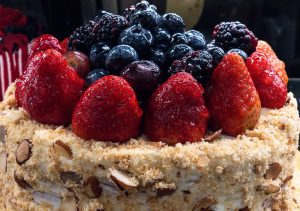
Please welcome back today’s guest: author Alison Hammer! During the day, Alison is a VP Creative Director for an advertising agency in Chicago, and nights and weekends, she writes upmarket women’s fiction—stories about family and friendship, love and loss. She also founded the Every Damn Day Writers group on Facebook.
Her two novels, You and Me and Us (April 2020) and Little Pieces of Me (April 13th, 2021), are unique in that they will both be released during the pandemic–when book releases as we knew them could not exist. But they still did exist in the digital landscape–a landscape that not only had to be navigated but also, in some instances, created. These new digital landscapes won’t just evaporate when the pandemic lifts, either. Rather, many of them will be sustained and used to complement traditional book release efforts.
So what are those strategies? Who better to tell us than Alison herself! Oh, and her favorite cake is vanilla with white frosting—classic and simple but so good. What does cake have to do with anything? Well, read on.
We’d also be remiss not to share Alison’s launch party information with you today! Check it out on her website, HERE, and follow her on Instagram, Facebook, Twitter, Bookbub, and Goodreads.
A 2nd Pandemic Book Release: Piece of Cake and Other Silver Linings
What a long, strange year it’s been! The last time I wrote for Writer Unboxed, I was just a few weeks away from launching my debut novel—a time in a writer’s life that can be filled with stress and crippling anxiety even when there isn’t a global pandemic going on.
A year later, I’m getting ready to launch a second book during the pandemic—but this time it’s not quite as scary or nerve-wrecking. While of course I’m disappointed to be missing out on some author-moments I still haven’t experienced, I know enough to look for the silver linings. And there are a lot of them.
Starting with my launch party.
Now, don’t get me wrong—I have had dreams about the in-person launch event that never happened. There was going to be a big poster-sized version of my book cover, a giant cake featuring my cover from Sweet Mandy B’s, my favorite Chicago bakery, and I was going to sign books until my hand hurt while someone from the bookstore went through the line, writing people’s names on a Post-It note, saving me from a potentially embarrassing moment if I forgot the name of someone I was supposed to know. (I always thought that was so smart!)
While that dream is still a dream, I had to let go of what was supposed to be and accept what was. Which leads me to point number one.
THE FIRST RULE OF THROWING A VIRTUAL EVENT
As much as you might think it’s a good idea to plan an event that re-creates an in-person experience, I have to tell you, it’s not. The two types of events have such different pros and cons, you’ll be much better off if you fully embrace the virtual space.
This honestly happened by accident the first […]
Read More
Publishing a book is the scariest, most exhilarating thing I’ve ever done. It’s hard to believe that my debut novel, The Kindest Lie, will enter the world in less than a month. One of the best parts of this journey has been sharing it with Julie Carrick Dalton and Sarah Penner, writers who are also debuting this year. Three different publishing imprints. Three very different books. Yet one shared obsession when we meet every Sunday afternoon on Zoom: Will my book be successful? Have I done enough to give my novel the best shot at success? What is success?
I turned to a few authors I admire (many who debuted in 2020) to hear what they’ve learned along the way. These writers, like most, were incredibly generous with their wisdom. Whether you have a book coming out this year or someday (and you will), save these nuggets of insight and pull them out when you need them.
What I wish I had known…
“I wish I’d known how overwhelming marketing and promotion can be, immediately after your book is released. Readings, panel discussions, interviews, book clubs, social media posts—all of these take up an amazing amount of time, and it’s important to keep your writing going. So, the best piece of advice I can give is to set aside at least an hour a day to devote to your next project. You won’t be sorry!”
-David Heska Wanbli Weiden, author of Winter Counts
“I had such a great debut year and learned so much as a result. What I wish I’d known going into my debut year is to not be ashamed to ask for help. As Black women, we’re so used to carrying everything on our shoulders. This mind frame bleeds into everything we do. With publishing, you have a whole team behind you with years of experience in navigating the difficult terrain of editing, marketing, publicity, etc. That doesn’t mean you won’t have an opportunity to educate them on how to improve upon this in our evolving landscape between publishing and social justice; it does mean you can use their assistance to grow your platform and give voice to you and your art.”
-Catherine Adel West, author of Saving Ruby King
“As a decades-long career coach to lawyers, I pretty much “coached” the heck out of myself as my debut month approached. But the one thing that most surprised me was how quickly the satisfaction, for me, of a good review dissipated compared to the malingering of a bad one. For every author affected by bad reviews, there is one for whom negative criticism remains instructive and constructive. Sadly, I am not that author! So, having a handle on how criticism would resonate with me, and how to handle or even avoid it, was one thing I wish I’d known.”
-Natalie Jenner, international bestselling author of The Jane Austen Society
“I wish I had known how kind, generous and compassionate readers are. I have received many letters since the publication of The Mountains Sing and I count them among my precious gifts. I also wish I had known how busy the year could be. I have done more than 100 virtual events during the last nine months since my novel’s […]
Read More
On Election Day in 2008, my father was bedridden, his body ravaged by lung cancer. Luckily, I’d convinced him to vote early, and less than three weeks later, he was gone. Herman Hugh Johnson, a man who lived through the Great Depression, World War II, and Jim Crow, cast the last vote of his life for America’s first Black president.
I believe those of us whose ancestors have been denied the right to vote have a profound respect for its power. My debut novel, The Kindest Lie, opens with an election night watch party for Obama, and I tell the story of the promise and limits of hope during that era. As an author, I’ve struggled with how public to be about my own political activism. Who am I to speak out about politics? Will I alienate readers? What I’ve come to realize is that as a Black woman in America, my very existence is political. The stakes are too high for me to remain silent, so I’ll continue to use my voice as an author to encourage civic engagement and fight for freedom and justice.
That’s my story, but I wanted to hear from other authors. So, I asked them why they’ve chosen to be politically vocal and public about it. Here’s what they told me:
“I talk to my (social media) followers about the election as if we were sitting in a room having a conversation. I like to know what people are thinking, and I like to be heard.” – Maurice Carlos Ruffin, author of We Cast A Shadow
“I am a writer. It is something I’ve always wanted to do. Always wanted to be. I want to sell books. Lots and lots of books. And spend my days thinking about the next book I want to write. But I am a mother. Of two Black sons. The wife of a Black man. The grandmother to a tiny Black girl. This country has never GIVEN us anything. We have had to demand it, take it, die for it. The last four years have shown just how fragile these gains are, how easily taken away. If I can’t breathe the air, drink the water, have access to health care, marry who I love, make my own reproductive choices, or even be assured that my sons will come home at night, then having a bestseller is pointless. I DO care about book sales and alienating readers, but not as much as I care about living in a safe, clean, moral country.” – Rita Woods, author of Remembrance
Read More
Hello and welcome to another Monday, in this, the year of a thousand Mondays.
I don’t want to harp on the obvious, so I’ll just summarize it like this: For many of us, 2020 feels endless and relentless. We are drowning in our feelings about the pandemic, civil unrest, and the upcoming election — and that kind of anxious uncertainty is not ideal for creative pursuits.
Some of you are doing the work anyway, somehow. In all seriousness, kudos! I am eternally impressed by those who get their shit done no matter the circumstances.
Others of us… Well, we’re trying. And that’s not nothing.
But yes, I am finding it harder than ever to make progress on my manuscript right now. Once upon a time, I probably would have considered that a flaw in my character, a personal failure. But if there is one thing I’ve learned over the years, it’s that beating myself up about not writing just leads to more not writing.
And if there’s a second thing I’ve learned over the years, it’s that I am more than my work (or lack thereof).
So instead of falling into those traps, I have been trying to shift my energy toward other writerly things. Things that are still productive, even if they’re not directly related to my work-in-progress.
If you too are needing to come at your writing career sideways for the moment, here are some ideas:
Read More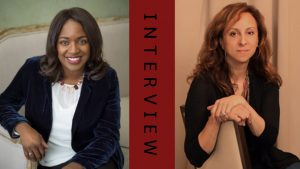
The first half of this year has been a monumental test in flexibility and resilience for authors and everyone in publishing. My debut novel, The Kindest Lie, will release on February 9, and that publishing date has changed several times as the William Morrow team attempted to position my book and others in their catalog for optimal success during these uncertain times.
Recently, I joined the team of A Mighty Blaze, a new organization that formed to help authors and books find their readers during this global pandemic. That’s how I met Laura Rossi who leads publicity for A Mighty Blaze. She worked in-house at top publishers, including Random House, Viking Penguin, and W.W. Norton before founding Laura Rossi Public Relations.
Laura was incredibly generous sharing with me nuggets of wisdom about promoting books during a pandemic, buying the right equipment for all the Zooming and Skyping, making publishing more diverse and inclusive, as well as pulling back the curtain on how some books get on those elusive, coveted “most anticipated” lists. I’ve edited our interview for brevity, but it was seriously so good that I wish all of you could’ve been on the phone with us.
Nancy Johnson: How has the pandemic impacted our ability to get our books out there into the world?
Laura Rossi: The first thing that happened to many books is their publication dates changed. That was a huge pivot for lots of authors, seeing their early summer pub dates move to fall or in some cases 2021. Summers work well for commercial fiction and beach reads, but it’s often not the best time for bigger books. That was a big trend I noticed. Authors had to give up control and let their publishers do what they thought was best in a very different world. Some books published and didn’t live up to expectations the authors had. Lots of books with March, April and May pub dates—copies were already printed and warehouses were still able to mail books—pubbed during a pandemic. But before May there wasn’t a lot of space for book coverage and some of those books that weren’t able to move didn’t get a lot of media or sales. However, if your book came out in hardcover during the pandemic, you still have a shot at pushing that paperback a year or more later. That second chance is encouraging.
NJ: How has publishing had to adjust now that we don’t have hand-sales in bookstores and in-person author events?
LR: All real-life events were paused or canceled, and many went online. Conferences, workshops, big in-person events like BookExpo and the intimate author lunch with someone from a magazine went away. Those schmoozing opportunities to hand-sell your book were gone. Some authors in the past would get pre-sales visits to New York to meet with booksellers. That personal touch has had to go virtual. People are not going on tours visiting 25 bookstores anymore.
NJ: This all sounds terrible. What do you tell your authors about how to pivot in this new environment?
Read More
image by Georgali/Kappa/Regoukou
It’s no secret that regardless of how you publish, a huge part of publicizing and marketing a book now falls on the author’s shoulders. The downside is, of course, that there are already so many demands on our time, it feels like we just don’t have a minute to spare. But there’s an upside too. Being able to connect directly with readers through social channels and other means gives you an exciting, sometimes inspiring, degree of control. When someone else is making and executing on decisions about how your book gets promoted, you’re distanced. In the best scenarios, you and your publisher are both investing in getting your book into the hands of readers. That is truly the best! But regardless of your publisher’s level of engagement and/or investment, you still have the power — and the opportunity — to connect with potential readers yourself.
But it’s exhausting, right? Telling people about your book in short form and long form or with links or without, promoting and describing that book, writing essays about yourself and your book and trying to get them published, organizing giveaways, holding Facebook launch parties, Tweeting and Instagramming about yourself and your book over and over? It can feel like screaming into the void.
So if you don’t want to do that, don’t do that. Problem solved!
For the paperback launch of my novel WOMAN 99, I’m doing some local events, but most of the time I’d usually spend on promotion is going to another project. It’s only tangentially related to my own book, and it may or may not have any impact on sales, but it makes me happy, and that’s a pretty good goal too.
For Women’s History Month the last two years running, I interviewed women writers on my blog with the hashtag #womenshistoryreads. I’m not even sure how many interviews I ended up with, but it was well north of 75, and it took a whooooole lot of my time those Marches. Three questions and an answer for each post. Invitations and followups and editing, oh sigh. (There was, thank goodness, a spreadsheet.) This year I decided to do something simpler and just ask authors I knew for one book recommendation each — one book by and/or about a woman — for a series tagged #read99women.
Spoiler alert: it still takes a huge amount of my time. (Headshots! Bios! Intros! Links! Another spreadsheet!) But since I’m just about officially done with my next novel THE ARCTIC FURY and have no other writing projects on the immediate horizon, it’s time that I actually have, for a change.
And it’s been great. Not only am I reaching out to authors I know across genres (not just historical fiction and nonfiction), I’m making connections with new authors I didn’t know before. I’m seeing reminders of books I loved and recommendations for books I’ve never heard of, old and new. It reminds me what a supportive and wonderful community fellow writers can be.
Participation. Not promotion.
Read More
“Okay, I’m a little, teeny bit jealous of a few writers,” I admitted to another debut author via the anonymity of Facebook Messenger.
“I am SOOOO jealous,” she typed back.
Behind the confessional curtain of social media, we could whisper that ugly truth. We even conceded we’d been jealous of each other from time to time. Once I began opening up to more of my writer friends, many revealed mild annoyances, burning secret resentments, and even crippling envy. Still, everyone stressed they were extremely happy, thrilled, and overjoyed (substitute other convincing superlatives) for the success of other authors.
One of the most insidious sources of this madness has to be the list, which is lauded as the holy grail of success by enough writers for it to be stressful. Well, all the lists. This time of year, almost every publication from O, The Oprah Magazine to The New York Times and PopSugar releases its list of the most anticipated books for the new year. The timing couldn’t be worse because those lists come on the heels of year-end wraps of the best books from the previous year. Every time a new list emerges, a collective, congratulatory whoop rises in my author communities and I believe it’s genuine. Still, amid all the fanfare, I know authors scan those lists, starry-eyed, looking for their own names.
Lists are not an immediate consideration for me right now. I’m in the early stages of the publication process completing a second round of structural edits for my novel, which doesn’t release until early 2021. But anticipatory angst is real, if a bit irrational, and I sometimes envy authors who make lists I’m not even eligible for, wondering if my own trajectory will be on par with theirs.
One winter afternoon I spent hours poring over a website called Edelweiss (totally unrelated to The Sound of Music), where you can request advance reader copies of books and browse publishers’ catalogs. It’s still early so my book doesn’t appear in the database yet. Still, Edelweiss offers a preview of what’s happening for other authors. I try to manage my expectations.
Be cool. Just be cool.
Still, I couldn’t help but notice the publicity and marketing plans for the most buzzed about authors, which include branded influencer packages, national author tours, New York media lunches, and pre-pub cocktail parties. Some authors whose publishers are committing few if any resources to boost their books often look at those plans with envy. For me, there’s this bubble of hope, cautious optimism coursing through my veins, as I imagine all that hoopla for my novel someday.
Read More
Photo by Sarah R. Photography
I recently shared a post on Twitter about a friend who won a writing contest. I was excited for him. Sharing his news seemed like an obvious move. Author Cai Emmons responded to my post with a simple comment: “You are a great literary citizen.” I got a bit choked up when I read her comment, which seemed silly, even to me.
Why did her response matter so much to me?
I thought about Cai’s comment a lot over the next few days. It mattered because I cannot control what people think of my writing. I cannot control how well my books sell or how many people will show up to a reading. I can, however, control how I participate in the literary community, and I very much want to be a good literary citizen.
But what does it mean to be a good literary citizen? I think about authors like Celeste Ng or Roxane Gay, who stand out as forces for good in the literary world. They take stands on important issues and support other writers. I’m certainly no Roxane Gay or Celeste Ng; I don’t have a huge platform with throngs of fans. But that doesn’t mean I can’t have a positive impact, or at least try to.
I think the keys to being a good literary citizen are authenticity, passion, and kindness. Don’t praise someone because you want to get something from them. But be honest with yourself. Admit that boosting others also gives you a boost. If you show up for other writers, they are more likely to show up for you one day. I’m not suggesting you promote another writer so that same writer will support you in return. There is no quid pro quo. (Sorry I couldn’t resist.)
Being a good literary citizen is more like tossing goodwill out into the Universe like a fistful of glitter. You don’t know where it will land, but you can be pretty sure it will stick to something.
The list below started as goals I set for myself. I don’t claim to be an expert, and I have plenty of room to improve. So I will consider this a list of standards that I hope I can live up to one day. No one can do everything. Don’t beat yourself up for the things you can’t do. Focus on the ways you can impact the writing community, no matter where you are in your journey.
Read More
In 2010, when I first dipped my toe into the publishing world, the biggest mystery to me was—besides figuring out the difference between a query and a synopsis—this thing called a “platform.”
At the time, I was writing about killer mermaids. I didn’t know how I was going to go about becoming enough of an expert on the subject that a potential editor would take me seriously. Imagine my utter relief when I learned that it was only the non-fiction writers who required a platform. All we fiction writers had to prove was that we had an imagination, a way with words, and that we understood the shape of a story.
That blissful world is no more.
These days, even debut fiction writers are being asked by would-be editors about their platforms. What they’re really asking is:
Read More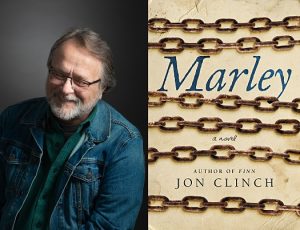
Today I’d like to return to an author I’ve spotlighted before: Jon Clinch, whose latest novel MARLEY hit the shelves earlier this month. I’ve known Jon for a dozen years or more, and have always admired his dedication, his work ethic, and his damn good writing.
Jon’s “serious author street cred” is undeniable, with his debut novel FINN earning him acclaim from the Washington Post, the Chicago Tribune, the Christian Science Monitor, and the American Library Association, among others. Oprah’s “O” magazine praised his next novel, KINGS OF THE EARTH, as “masterful and compassionate.”
With MARLEY, Jon offers us a reimagining of the characters made famous in Charles Dickens’s A CHRISTMAS CAROL, exploring the complex and ultimately toxic relationship between Ebenezer Scrooge and Jacob Marley. Make no mistake: This is not a retelling of the Dickens classic; rather, it sets the stage and helps us understand what made Ebenezer such a, well, Scrooge. And we finally learn why Marley’s ghost kept rattling those infernal chains.
To get a sense of the reading experience that awaits within the pages of MARLEY, check out this to-die-for New York Times book review, in which reviewer Simon Callow praises how Jon “endows Dickens’s snapshots with a three-dimensional, often alarming, life,” and concludes that “Clinch has done something remarkable in ‘Marley,’ not merely offering a parergon to Dickens’s little masterpiece, imagining the soil out of which the action of ‘A Christmas Carol’ grows, but creating a free-standing dystopian universe.”
(No, I’m not jealous of that NYT review. Not at all.)
Ahem. Back to Jon. He was gracious enough to take a break from the whirlwind of activities and obligations that accompany a major book launch to answer a few questions for our WU audience. Read on for a thoughtful glimpse into the mind of a master storyteller.
Keith: MARLEY marks your second time developing a character from a major novel written over a century ago, in each case fleshing out what was previously a supporting character into a memorable and compelling protagonist. When working with such well-known source material, how do you make it a springboard for creativity, rather than a straightjacket?
Jon: The key, for me, is always to take the novelist’s word as gospel—and therefore to work within his world as if it’s a real place occupied by real people. The first requirement, then, is to study the original work in a particular kind of way.
In an essay I wrote for a book of fresh looks at HUCKLEBERRY FINN, I described the process as “a reading of the original that was both close and expansive, an approach that instead of being critical or scholarly was engaged and sympathetic. It would be the willful act of a reader prepared to enter the author’s world via both the text on the page and the text left unwritten. Such a reading of HUCKLEBERRY FINN could not focus directly on Twain’s technique or methods. On the contrary: my intent was to be captivated only by the narrative, immersed completely in Huck’s story as if it had actually taken place and […]
Read More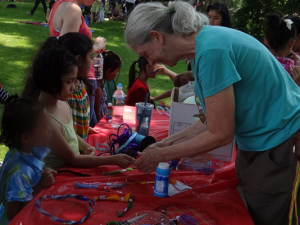
Author Anne O’Brien making friendship bracelets.
In this week’s Author Up Close, I interview Anne O’Brien Carelli, author of adult nonfiction, the middle-grade book Skylark and Wallcreeper, and the picture book Amina’s New Friends. She’s been a friend and mentor since we met at our first Writer Unboxed conference. Anne is the owner of a leadership training business, and she has taught me invaluable lessons about managing the craft and business sides of being a writer. Her advice will be especially helpful to anyone writing and querying middle-grade or YA fiction, and she’s a great example of using the skills you’ve learned in previous careers in your career as a writer.
GW: How did you find your agent and land your publishing deal?
AOBC: I had published two nonfiction adult books and self-published a picture book, but the children’s traditional publishing world was new to me. I soon discovered that writers who want to publish a children’s book need to have perseverance, blind optimism, a desire to hone the craft, and a belief in serendipity. It also helps to pay close attention to what is published in your genre.
I found my agent by chance. As I was researching an editor I admired at a conference, I came across a description of her colleague, who looked like the perfect match for my middle-grade book, Skylark and Wallcreeper. I had rewritten my query a million times, but tried again.
I think it’s really important to investigate what agents like to read, what they are looking for, and what types of books they have represented in the past. You can learn a lot of this information by attending conferences and signing up for short consultations with individual editors and agents.
As for landing the publishing deal? I give my agent all of the credit for that. She also looked for the right match and Little Bee Books has been a wonderful home for my book.
GW: Why did you decide to write middle-grade fiction, and why this subject matter?
AOBC: There was never any doubt that I would eventually write middle-grade fiction. The picture book was written because I have volunteered with refugee children for many years and saw that the story about a refugee girl’s first day in an American school was desperately needed. The textbooks I published were related to my work in gender equity and leadership. But many eons ago I taught sixth grade and social studies, and middle grade is my favorite age group (ages 8-12). Those kids are just on the cusp of figuring out who they are, and are developing independence and coping skills. middle-grade books, especially in the last two or three years, address a number of tough issues that kids are facing today. But every middle-grade book has hope at the end, and that appeals to me.
Read More
Photo by rawpixel on Unsplash
Authorpreneur is a term often used to identify authors who embrace the business side of writing. And though the term doesn’t quite roll off the tongue, it does capture the essence of what writers who hope to make a living from their writing have to be—author entrepreneurs. Even authors with traditional contracts will tell you there’s much more to a successful writing career than daily word counts.
From designing graphics for use on social media, to preparing for a rainy day, the savvy authorpreneur should have a virtual toolbox on hand to help them with the business side of a writing career. Fortunately, there are dozens of affordable apps and online tools available to help. Here are five I’ve researched and either currently use or plan on using in the near future.
Design
Consistent design across your author platform helps establish your brand. Yes, you have a brand. At its simplest, your author brand is how you present yourself to your audience. It includes things like your book covers, website, blog posts, and messaging. The good news is that when it comes to social media and web content imaging, you don’t need a design degree or Photoshop to bring cohesiveness to your messaging. Enter Canva. Canva allows even the most design-challenged writer to create visually appealing social media graphics and presentations, including Twitter and Facebook headers and posts, image quotes, and business cards. Canva has both free and paid options.
- « Previous
- 1
- 2
- 3
- Next »