setting

INTERMEZZO (noun) As per Merriam-Webster: a movement coming between the major sections of an extended musical work.
Usually, I draft my quarterly WU posts about a month before they’re due. This time, I’ve ditched my intended topic. Best laid plans and all that. The piece I find myself working on today is not prescriptive writing advice, nor is it about the angst of the author’s journey. This week, I’m at my father’s house, working with him—at his request—to edit the obituary he wrote for himself. Also, in the quiet of my childhood bedroom, I’m drafting a eulogy. Since I arrived on November 6th, I’ve avoided national news and haven’t begun to process my feelings about the election results.
Real life intrudes. Sometimes endings aren’t clearly visible from the start.
In late October, my ninety-five-year-old father went into the hospital with atrial fibrillation. A week later, on Election Day, he received a stage-four cancer diagnosis with months to live. Hospice entered the plot. The scenery changed, with the guest room of Dad’s house quickly reconfigured into a hospital room. Time changed; with glimpses of future holidays, minus the main character. Simultaneously, present time ticks relentlessly forward as he loses strength. Days and hours drag in a kind of static monotony measured in loads of laundry and empty cubes in the big plastic organizer that holds rainbow-colored meds.
My father’s mind is still razor-sharp. He knows the grass-cutting service needs to be paid. He explains to me how to configure the tube on his nebulizer breathing apparatus. I didn’t know he’d written his own obit until he asked me, from his hospital bed, to edit it for him.
My father’s obituary is a first-person thank-you note for what he calls his “charmed” life, starting with his parents and siblings and expressing gratitude to both institutions and people who’ve helped him along through life. Frankly, if I were being paid to edit it as a personal essay, I’d call his work self-indulgent, rambling, and unevenly paced, burdened by an overabundance of backstory and flashback, with too many named characters. Under the circumstances, I’m doing my best to correct punctuation and grammar and get the great-grandkids’ names right. My brothers and I plan to run whatever version Dad approves.
In the past weeks, on the three-hour drive from my home to Dad’s, I’ve listened to multiple audiobooks. I’ve just finished Sally Rooney’s Intermezzo. Set in Dublin over four months in 2022, Rooney’s main characters are two brothers who are different as night and day. Their father died recently from cancer and they’re grieving his loss at the same time, but not together. On one hand, it’s a story that—at times—proceeds with the painful slowness of pulling off a Band-Aid. Despite the prolonged discomfort, I found myself engrossed, helpless to look away from what lay unhealed and oozing beneath. Brothers Ivan and Peter are so fully realized, and Rooney’s portrayals are so intimate that we cringe when they cringe. We hold our breath through many awkwardly squirmy exchanges. We observe pettiness, and the brothers butting heads, blurting out what they’ve been holding inside and stewing over. And then we see their regret.
For me, this resonates this week.
Rooney’s structure alternates chapters between Ivan and Peter and also switches […]
Read More
Naming characters is my least favorite part of writing. A character’s name imparts more than just a moniker by which to differentiate actors in a plot. Names are powerful—they provide limits and possibilities to what the character might be or do. For me, the wrong name for a character throws things off in the writing. A character that has not been given the right name misbehaves. Beatrice would not speak the same way that Susan would. Ernest would choose different clothes from Roderick. Until I find the right name for a character, they don’t willingly occupy their role within the larger story.
While clearly I tend to overthink things, these expectations are extensively influenced by stereotypes and preconceptions. The connections we make when we hear someone’s name are as instantaneous, as deep-rooted, and as difficult to shift as first impressions. Getting them right is worth a little extra time and consideration.
I’m not going to tell you how to choose or derive a name—there are numbers of name generator tools on-line. I’m going to try to highlight the complexity and variety of ways in which a name can influence first impressions to help provide you with ways to assess what name best fits your character and your story.
The Power of Names:
Names create expectations, not just of the person’s individual characteristics, but also of their background:
Read More
In preparation for the upcoming film adaptation of Claire Keegan’s Small Things Like These, starring Cillian Murphy and Emily Watson, I finally picked up the novel and read it to get ahead of the cinematic curve, as it were.
It didn’t take long to finish—in some ways the novel is an expanded short story—but the impact was profound.
In particular, Keegan’s ability to create menace without violence—or, I should say, overt violence—reminded me that some of the greatest threats we face are not physical so much as social, psychological, emotional, and moral.
By implication, they also provide some of the most dramatic forms of personal danger we can portray in our writing.
Here’s my seat-of-the-pants analysis of how Keegan gets this done.
The Setup: Character
We experience the events of the novel, which take place in late 1985, through the eyes of its protagonist, Bill Furlong, who is married with five daughters. He’s a fuel merchant:
Furlong sold coal, turf, anthracite, slack and logs. These were ordered by the hundredweight, the half hundredweight or the full tonne or lorry load. He also sold bales of briquettes, kindling and bottled gas. The coal was the dirtiest work and had, in winter, to be collected monthly, off the quays. Two full days it took for the men to collect, carry, sort and weigh it all out, back at the yard.
He is also something of a self-made man, which reveals two of his chief vulnerabilities: the risk of financial failure and the stain of his birth:
Furlong had come from nothing. Less than nothing. His mother, at the age of sixteen, had fallen pregnant while working as a domestic for Mrs. Wilson, the Protestant widow who lived in the big house a few miles outside town. When his mother’s trouble became known, and her people made it clear they’d have no more to do with her, Mrs. Wilson, instead of giving his mother her walking papers, told her she could stay on, and keep her work. On the morning Furlong was born, it was Mrs. Wilson who had his mother taken to the hospital, and had them brought home. It was the first of April, 1946, and some said the boy would turn out to be a fool.
As a school boy, Furlong had been jeered and called some ugly names; once, he’d come home with the back of his coat covered in spit, but his connection to the big house had given him some leeway, and protection.
After his mother dies suddenly when he’s 12 years old, Furlong seeks out his birth certificate and discovers it lists his father as “Unknown.”
After attending technical school, he winds up at a coal yard and works his way up.
He’d a head for business, was known for getting along, and could be relied upon, as he had developed good, Protestant habits; was given to rising early and had no taste for drink.
But the wolf never seems terribly far from the door:
The times were raw but Furlong felt all the more determined to carry on, to keep his head down and stay on the right side of people, and to keep providing for his girls and see them getting on and completing their education at […]
Read More
Maybe, just maybe, the inspirations for my WU posts are at times a little too on the nose. I mean, who would have thought that four years after a global pandemic, three years after an assault on the US Capitol, and mere weeks following the felony conviction of a former President, a subsequent assassination attempt on his life and the unprecedented departure of the sitting President from his reelection bid would prompt me to consider the unraveling of social order and how it is depicted in fiction? Really, what are the chances? Yet here I am contemplating all of that, synthesizing it in my writerly brain, and offering it up for consideration by the WU community. As obvious as the topic may be, I chose to stick with it for one simple reason. I can’t imagine a better time, given that understanding human nature and its tribal rhythms is such a driving force behind fiction, to explore how best to convey the collapse of a story world, be it on a global or an intimate scale. So, let’s dive in, shall we?
My first thought on the topic is merely an observation – Make note of how you feel about recent events. As writers, we possess an innate ability to draw upon personal experience to breathe life into our tales. Emotions from real experiences inform fictional scenes all the time. This bewildering moment in time is no exception. Whatever you may be feeling – rage, frustration, melancholy, paralysis – are precisely the emotions with which your characters will grapple while navigating the rapid demise of their world. Own it, absorb it, and remember it – the feelings will be useful someday on a future project, if not your current work in progress.
Beyond that, I offer the following ideas on capturing the disintegration of social order in fiction:
Stand the Dominoes Carefully
If you’ve set out to craft an apocalyptic tale, this may seem obvious. But it’s worth noting for stories operating on a smaller scale as well. A reader needs touchstones in your story world to which they can relate – authorities, cultural entities, buildings, symbols. As your story opens, introduce them and underscore, subtly, their importance to the normal order. Perhaps a young protagonist is preparing for a coming-of-age ritual, religious or social. Perhaps a secondary character works for the government, holds financial power, or maintains civic infrastructure. A church, courthouse or town square may occupy a prominent place in the community. Introduce these elements early and weave them into your opening act, laying the foundation of what normality looks like for your cast of characters.
In the novel All the Light We Cannot See, Anthony Doerr introduces the reader to the Muséum national d’Historie naturelle in Paris in the opening pages. The father of the young blind protagonist, Marie, is a locksmith employed at the institution, which houses a rare gem that plays an essential role throughout the tale. The grandeur of the museum is evident in her reverent descriptions. Later, as German forces approach the city, Marie senses but fails to appreciate furtive preparations underway to remove and conceal its priceless natural objects. When the city is eventually overrun, she sits alone inside the locksmith office, awaiting her father. She feels […]
Read More
Please welcome C. S. Lakin to Writer Unboxed today! C.S. is an award-winning author of more than 30 books, fiction and nonfiction (which includes more than 10 books in her Writer’s Toolbox series). Her online video courses at Writing for Life Workshops have helped more than 5,000 fiction writers improve their craft. To go deep into creating great settings and evoking emotions in your characters, and to learn essential technique, enroll in Lakin’s courses Crafting Powerful Settings and Emotional Mastery for Fiction Writers. Her blog Live Write Thrive has more than 1 million words of instruction for writers meant to help level-up your writing. Welcome, C.S.!
Settings in fiction are not just backgrounds; they are living, breathing components of your story that can immerse readers in your narrative world. Whether it’s the bustling streets of a city or the tranquility of a countryside, the setting plays a crucial role in engaging your readers.
Fiction writers often ignore setting. Or it’s casually brushed over as if the writer begrudgingly knows something ought to be said about the place her character is in and just wants to “get it over with” and move on to the interesting elements in the scene.
An attitude like that shows a complete lack of understand of how powerful setting is.
Setting is perhaps the most versatile and useful element in fiction. It can reveal character motivation, backstory, past trauma, and the story’s cast, as well as reveal emotion and supply tension. If you haven’t considered how powerful setting can be, take some time to work on this key element in your fiction.
To help you get started, let’s explore five essential tips to help you understand the various elements of setting and create memorable, immersive worlds for your characters.
Tip 1: Choose Your Locale with Purpose
The choice of where your story unfolds can significantly impact your narrative. Consider locales that align with your plot, characters, and the emotional atmosphere you want to create. Best-selling author Emily St. John Mandel demonstrates this in Station Eleven, where selects settings like the post-apocalyptic wasteland and the Traveling Symphony’s nomadic existence to enhance the sense of survival, loss, and the enduring human spirit.
In Station Eleven, the world has been ravaged by a devastating flu pandemic, leaving behind a desolate landscape. The setting of a post-apocalyptic world serves a dual purpose. First, it magnifies the sense of isolation and vulnerability felt by the characters, emphasizing the fragility of human existence. Second, it becomes a canvas upon which the resilience and creativity of the characters are painted.
The corridor was silent. It was necessary to walk very slowly, her hand on the wall. A man was curled on his side near the elevators, shivering. She wanted to speak to him, but speaking would take too much strength, so she looked at him instead—I see you, I see you—and hoped this was enough.
No more flight. No more towns glimpsed from the sky through airplane windows, points of glimmering light; no more looking down from thirty thousand feet and imagining the lives lit up by those lights at that moment. No more airplanes, no more requests to put […]
Read More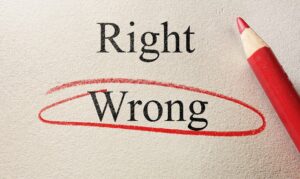
In the late ‘70s, when I was a freshman at Indiana University in Bloomington, Indiana, a film crew descended upon our quirky little town to shoot a movie. At the time I believe it was called “Bambino,” but that would change. The movie focused on an annual bicycle race the university hosted, called the Little 500 (a reference to the famed Indianapolis 500, the big annual auto race held 50 miles to the north). The Little 500 was the event of the year for students and townspeople alike, and to this day it draws crowds of 25,000 whenever April rolls around.
When you live in smalltown central Indiana, it’s not every day that Hollywood comes calling, and both the city and the university greeted the film project with open arms. It was the talk of the town, and soon we began seeing sections of the campus and surrounding area cordoned off while a cafeteria, courtyard or local street was commandeered to film some scene.
What was the movie about? Nobody really knew, other than that the climactic moment would be a reenactment of our big bicycle race. And – most thrilling of all – there was an open call to attend said reenactment as an extra, since they needed the stadium in which the race was held to be full of people. As a bonus, they also needed a ton of competitive bike riders, and since my dormitory floor had a team that had qualified to compete in the real race, the guys on that team were hired to ride in the reenactment, while the rest of their loyal floormates fake-cheered them on from the stands, hoping to be captured forever on film.
Suffice to say, we were stoked.
It didn’t take long for some of the novelty to wear off. The film crew seemed to be everywhere, and they showed no signs of ever being done. It became tiresome to have to walk around to a rear entrance of an academic hall, because the front of the building was being used for some scene they were shooting.
Even more troubling, we began to notice what they were getting WRONG. We heard talk that the movie would highlight rivalries between students and “cutters” – a derogatory name the filmmakers were using for the local townspeople, harkening back to a bygone era when Bloomington was home to a large workforce of limestone cutters. The problem was, the limestone quarries had been closed for years, there was little or no actual rivalry, and nobody called them “cutters.” “Townies,” maybe. A few called them “stonies” (for “stone cutters”). But what was all this “cutters” nonsense? No, this did NOT bode well.
And then there were the race scenes. Despite the initial surge of interest, it quickly became evident that there was no way to actually fill the stadium where the race was being filmed day after day, because nowhere near enough people were showing up. So the film crew would direct us (yes, yours truly was in some of the crowd scenes) to all shuffle back and forth to different parts of the stadium and sit together in crowded clumps of people. After one shot was completed, we would be ushered to some other section of the stands, and […]
Read More