Posts by Anna Elliott
Today I want to talk about endings– or more specifically, an odd phenomenon about novel endings that I’ve noticed. At least, I think it’s odd. Generally speaking– and I’m sure authors of category romance books could probably speak to this issue even more than I can– there seems to be a widely-held view that happy endings are somehow inherently less ‘meaningful’ or ‘literary’ than sad ones. I remember once reading an interview with Sue Monk Kidd about her breakout debut The Secret Life of Bees in which she described struggling with the novel’s ending. Her gut as an author was pulling for a happy ending, but she felt an external pressure to make it end badly– as she put it, “I was influenced, too, by my impression (right or wrong) that “happy endings” in literary novels were often sneered at.”
Now, I’m not for a moment suggesting that sad endings are not meaningful or literary or worthwhile to write and to read. Good grief no. If this past year has taught me anything, it’s that all the ‘happiness is a choice’ stuff is sometimes a big fat lie. Sure, happiness is often a choice we can make– I would even say more often than we think. But there are also times when happiness is simply not a possible option . . . times when all you can do is sit with the sad, accept that it has something important to tell you, if you have the courage to hear. It’s just this odd (to me, anyway) notion that happy endings are by nature less worthy of literary respect that I wanted to question.
One viewpoint I’ve heard sometimes is that happy endings are less ‘realistic’ than sad ones. Which honestly strikes me as doubly odd– because no ending is especially realistic, really. One of the first things you notice about life is that– except for, you know, death– it doesn’t actually contain endings at all, whether happy or sad. No one gets convenient freeze-frame and fade-to-black at an especially profound high point or a low point. The words ‘The End’ don’t magically appear in swirly fonts in the air above our heads. Even the major milestones of being done with one phase– graduation, marriage, birth– really only mean that a new phase has begun. If we’re talking realistic– if books were real life– the couple that falls into each others arms at the end of a romance could be headed for divorce within the year. The tragic hero who ends his story in a cloud of existential sorrow could wake up the next morning, win the lottery . . . meet his soulmate . . . joint the Peace Corps and decide to change the world . . .
Read MoreI’ve read a lot of posts on rejection, lately, both here on WU and elsewhere. Understandably– it’s a common topic, because if you want to get into the writing business, the odds are about 99% certain that you WILL face the snake-bite sting of rejection at some point. And probably more than once– because the truth is that these days (unless you’re outrageously, spectacularly successful, and sometimes not even then) even if you land a publishing contract once, you will still likely have to go through another round of submissions on your second project. And third, and fourth. And every time, the spectre of possible rejection hovers near.
A couple of months ago, I read a post by a lovely, wise, talented author whose book was in the process of being rejected all over town, and it took me back to the days before I landed my first contract, when I was in exactly her shoes. It made me ask myself what advice I would give to my then-self from my perspective now. I started out trying to frame a comment on her post, but soon found that the comment was evolving into post-length– so here it is. My thoughts on rejection, having faced it WAY more times than I can possibly count over the course of my so-far 10 years writing career– and knowing absolutely that I will face it again.
First of all, the title of this post– I honestly think it’s the single most important question you can ask yourself in the face of rejection. Maybe even the most important question of your writing career. Rejection sucks. It really, really does. It’s painful and hurtful and embarrassing– whether you’re getting a rejection from an agent, a publisher, or just negative feedback from a critique partner or writing group. And I think our tendency as writers (at least my personal tendency) is to want to dig deep into that– think about it, analyze it, describe how it feels, both to ourselves and others. We’re writers; we process things by putting them into words. So I get it if rejection makes you feel like hiding under the blankets–or on writing message boards– and constructing brilliant, poetic similes to describe how you felt on opening the e-mail from the agent/publisher/critique partner. Really I do. I’d even say go for it if it makes you feel better. But I think the most important first step you can take when facing a rejection is to ask not, How do I feel now? (Or the congruent question: What the blankety-blank-blank is wrong with this agent/publisher/critique partner?) The important question is: Where do I go from here?
Read MoreThere are days when I joke with my husband that I’m going to dedicate my next novel: To my children, without whom this book would have been finished sooner. Oh, it is tempting sometimes. My kiddos are my joy, my light, my universe– all those good things. One of the first things you learn as a parent is that all those squishy greeting-card sentiments? When it comes to your children, they are really true. But conducive to long stretches of uninterrupted writing time, small children are definitely not. I do have help– three mornings a week, our lovely babysitter comes and takes my girls to the park for a couple of hours so that I can sit in an amazingly quiet house and wedge a longer stretch of writing into our usually busy homeschooling schedule. But at the moment, she has the audacity to be off on her honeymoon (Kidding! I truly wish her a lovely time!) which leaves me without that luxury for three weeks.
(Right now as I type this, my girls are downstairs. Being suspiciously quiet. Which means that it will probably take me twice as long to clean up whatever mess they’re making as it will to write this post).
But anyway, I thought that this would be an excellent opportunity to remind myself that there are ways– really there are– that having small children has actually been an incredible benefit to my writing career.
You get to experience the world through a child’s eyes. I read somewhere or other that novelists should strive to bring the boundless wonder, curiosity, and amazement of a young child’s perspective to their writing. Look at that huge tree! Wow– look, a brown dog! Mama, you HAVE to see the enormous bug in the back yard. Children offer a daily reminder of the wonder and miracles to be found even in the minutia of daily life– and that awareness inevitably seeps into my writing.
You’re constantly reminded of the simple magic and power of stories. As a writer, I tend to automatically think in analytic terms of all the stories I encounter– those I write, those I read, even those I watch on a movie screen. And I think it’s important to do so– but at the same time, it’s easy to get a little bogged down by that sometimes: thinking in terms of micro and macro tension, character arcs, plot pinch points, etc. etc. My girls and I also read together for hours a day, though– and at 6 and 4, neither of them is consciously thinking about any of that. They simply love and respond to good stories, love getting lost in a make-believe world. It’s a breath-of-fresh-air reminder of the overarching purpose of all those craft techniques in my writing toolbox.
You have a constant, built-in reality-check when creating fictional child characters in your own books.
Read MoreMy children and I are studying Picasso at the moment, and I learned that he famously said, “Art is a lie that tells the truth.” (Everyone else in the world may well have known this already, but I’d never heard that quotation before). He wasn’t talking about novels, specifically, but nonetheless, it struck me as one of the most apt descriptions of a well-crafted novel that I’ve ever heard; the essence of what I’m trying to accomplish with every book I write. But actually, those aren’t the kind of writerly lies I wanted to talk about today, at least not directly. I’m talking about the writerly lies, white and otherwise, that we tell ourselves while we’re in the throes of the writing process.
Here’s mine, my biggest one, the lie I tell myself every single time I start a new book: Maybe this time I’ll get it right on the first try. I never do, of course. For me– and for most if not all of the other authors I know– getting the first draft of a novel perfectly sparkling and correct is impossible. Every chapter– every paragraph and sentence, even– that I write teaches me something new about my characters and the journey they’re on. Which means that no matter how much I plan and outline in advance (and I do quite a bit, and not that it’s not helpful) I don’t fully understand my characters or their journey until I’ve written them through it– sometimes all the way through it, right up to the very end.
And that means that the opening chapters of my book get written and re-written and written again as I understand more fully what the book is all about. It’s inevitable. Even the books that have come to me the most easily and the most quickly, I’ve re-written the opening chapters at least . . . I don’t know . . . I’d say a minimum of 3 times.
But I don’t let myself think about that when I’m actually writing those opening pages of my very first draft. If I did, if I let myself dwell on the fact that in all likelihood 90% of what I was writing was doomed to end up on the cutting room floor . . . I won’t say I’d never start another book again, but it would definitely be harder to sit down and take that giant first leap of putting the first words on the page. So instead I let myself believe the little white writerly lie, Maybe this time will be easier– maybe this time I’ll get it right on the first try.
Read MoreImage by Brocken Inaglory licensed under the Creative Commons Attribution-Share Alike 3.0 Unported license.
In the last couple of months, I released one book and wrote another in six weeks, start to finish. (No, I don’t usually write that fast; yes, I really, really wish I had the magic recipe to make novels come that quickly and easily all the time– if I ever figure that recipe out, I’ll post it here!) I have more to do– there’s always more to do. Edits on another mostly-completed book, a sequel to the just-finished novel . . . But this week, I’m not working on any of it. This is the part of the process where I know I need to take some time to regroup and recharge, because I’m just . . . empty. If you imagine a story-well inside where the creativity bubbles up, then mine is at the moment dry.
And not that that’s a bad thing. There was a time– a LONG period of time–when being creatively empty would have felt like a bad thing to be– scary and unpleasant and wrong. Earlier in my writing career, I would have fretted and fumed at not being able to write, or worried that that inner story-well would never be refilled. To be honest, I still feel a bit restless when I have to take a break from writing– I love getting my daily word count; I’m happiest when I’m on fire with a story that is begging to be told. But this time around, it occurred to me that I was feeling much more at peace than usual with the idea of needing to take time to recharge. Somewhere along the way, I’ve learned to trust the process, to trust that the well of creativity will once again be filled- because it always is. To trust that my fingers will soon start to itch with the urge to write another story–because they always do. This time around, I’m letting myself relax into all the ways I’ve found over the years to help with a creative recharge.
Here are my chosen strategies:
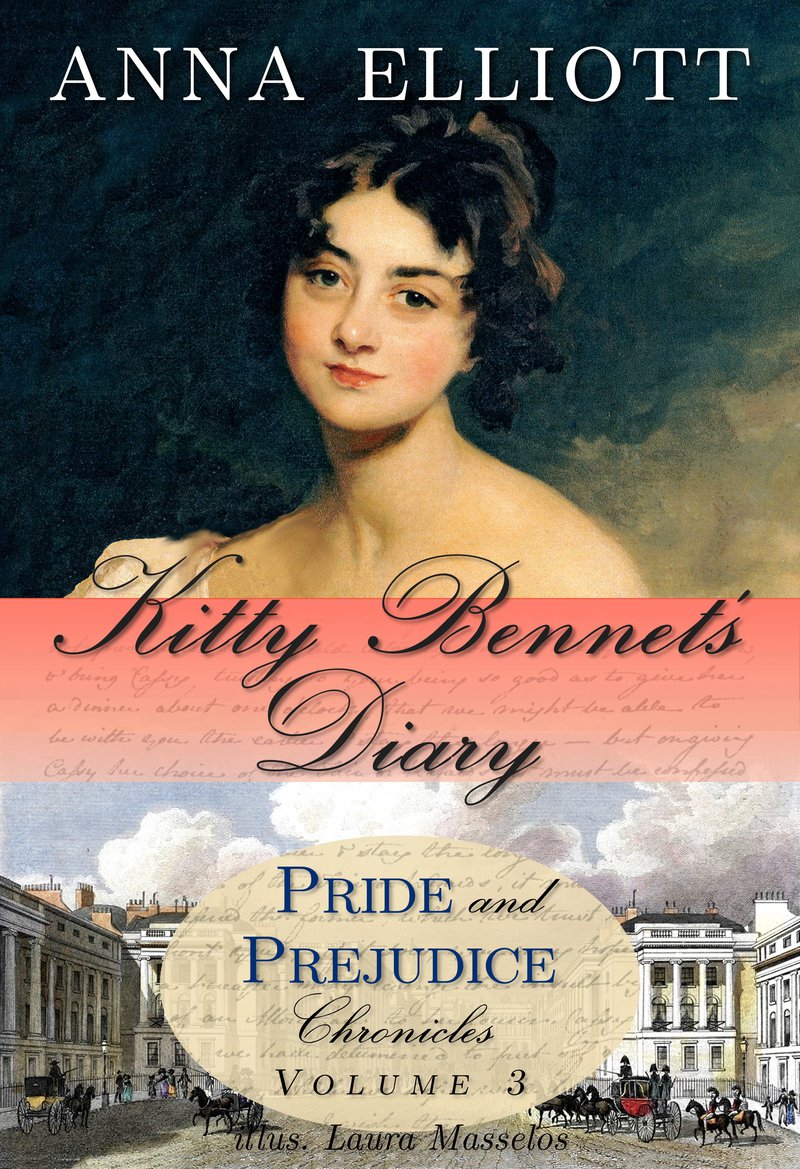
Read MoreThis past month, Kitty Bennet’s Diary, the third book in my Pride and Prejudice Chronicles, released. Thanks so much to everyone here at WU for letting me share a bit about the book here!
Q: What’s the premise of your novel? Kitty Bennet’s Diary is the third of my diary-format imagined sequels to Jane Austen’s Pride and Prejudice. The story focuses on Kitty Bennet, younger sister to Elizabeth Bennet. To quote the back cover copy:
Kitty Bennet is finished with love and romance. She lost her one-time fiance in the Battle of Waterloo, and in the battle’s aftermath saw more ugliness and suffering than she could bear. Staying with her Aunt and Uncle Gardiner in London for the winter, Kitty throws her energies into finding a husband for her hopelessly bookish sister Mary, and discovering whatever mysterious trouble is worrying her sister Jane. But then she meets Mr. Lancelot Dalton, a handsome clergyman with a shadowed past–and discovers that though she may be finished with love, love may not be at all finished with her.
Q: What would you like people to know about the story itself? A little-known bit of Jane Austen lore is that according to accounts by Austen’s brother, she actually shared with her family a bit about what she imagined for the cast of characters in Pride and Prejudice after the official close of the novel. The basis for Kitty Bennet’s Diary was in fact the details Jane Austen shared with her family about Kitty and Mary Bennet’s eventual fates. It tremendously fun– and a tremendous privilege, too– to get to write both Kitty and Mary towards the endings that Jane Austen herself imagined for them. I hope Austen would approve of the road I had them travel to get there!
Read More
This month, I’ve been dipping my toes into the water of a brand-new project, taking the first steps on the looooong road that will eventually (I hope!) lead to a finished novel. I actually love this part of the process. Doing loads and loads of research reading, letting myself daydream as I read (or do dishes, or watch my six year old practice handwriting), racing to my computer to type notes into my ‘ideas’ folder as they occur to me. It’s a little like decorating a Christmas tree at this stage of the game. Every day I unwrap a few shiny ornaments–a setting, a plot twist idea, a deeper understanding of the hero’s emotional baggage and journey– and tentatively decide where they might hang. I don’t have a vision of the whole tree, not yet–I may not until the moment when all those shiny ornaments are unwrapped and hung and I type ‘the end’ at the close of my first draft. But it will come.
One of those shiny ornaments that I haven’t quite gotten unwrapped (I swear I will give up on this metaphor before you’re all thoroughly sick of it!) yet is the narrator’s voice. That will come, too, I know–it always does, when the time is right. There are many guidelines–many very good– out there with tips on how to strengthen your narrative ‘voice’, but to be honest, I don’t typically use any of them when I’m writing or outlining. For me, there’s an element of almost magic in uncovering a character’s unique voice and style of narration. At some point in my reading and research, the main character’s voice simply starts sounding loud and clear in my head. A lightening bolt strikes, and that’s the moment when I know I’m ready to start typing.
Which is great, but not especially predictable or helpful in terms of giving other authors advice on how to find their own voice. I really enjoyed Lisa Cron’s post here last summer on the subject of ‘unmasking the muse’. Essentially, Lisa suggested that the creative force that drives our writing isn’t some external ‘muse’ beyond our control, that even when it seems a question of magical lightening bolts striking and bringing characters to life, it’s really our amazing subconscious minds at work. So this time around, I thought I’d try to pay attention and delve into the process a little bit more. Where exactly do these voices come from, these characters’ voices that we hear so loud and clear when we’re telling a story? How do we make them striking and unique and ensure that they come alive on the page?
Read MoreI wish this were one of my books, and I could somehow re-write the ending to this story, make it a happy one. But it isn’t, and I can’t. Two months ago, I shared the news here on WU that we were expecting our third baby. Very sadly, this past month, the baby died during the second trimester.
At hard times in my life, I’ve always turned to prayer, and faith. But you know, I’ve always relied on stories—on books and imaginary characters and other authors’ words—too, even if it’s in a different way.
I remember when I was twelve, and in the throws of my first terribly serious summer camp crush. His name was … Jim? Yes, I’m probably more than 90% certain it was Jim; I’m equally fairly certain that he barely registered my existence. But anyway, when summer ended and the autumn leaves were turning colors and it was safe to assume I wouldn’t see Jim again (see fact of his barely registering my existence, above) I solemnly assured myself that, “’tis better to have loved and lost than never to have loved at all.” Which now strikes me as side-splittingly funny with a dash of toe-curlingly embarrassing mixed in. And heaven help me, you’d know from that story alone that I was basically doomed to grow up a writer. But at the time, it actually was a comfort to my sparkly pink 12-year-old heart.
On a more serious note, after the birth of my first daughter, I read a passage in Diana Gabaldon’s Dragonfly in Amber that so, so perfectly captured the crazy, joyful, teary, terrifying mix of the postpartum emotions that I remember sitting with my newborn girl in my arms and rereading it again and again and again until I knew it by heart. It felt like a love letter written directly to me—as though this author whom I’d never met and probably never would had somehow still managed to reach out her hand and tell me, You are not alone.
All this month, I’ve thought of a beautiful line from Barbara Kingsolver’s Prodigal Summer about those we love and lose and grieve for: “You learn to love the space they leave behind.”
We named the baby Wren, for the tiny bird that rose above even the eagle and soared the highest in the legend about the contest of all the birds. I believe that one way or another, I will see her again. But I believe something else, too: I believe that somehow, some way, all this pain and grief and hope inside me now will work its way into my writing, into the stories I tell.
Not that I’m planning to write a book about miscarriage or a mother who loses a child, nothing that directly parallel. And not that I necessarily believe this was the “reason” or “purpose” behind my losing the baby, either; nothing so trimmed-off and tidy. I just know that sometime in the future, in the midst of some book I’m writing, I’ll find myself typing words that would never have come to me without my heart having been cracked open the way it is now. And those words will be my love letter—as I hope in a small way this […]
Read MoreI just watched this very interesting clip of an interview with Martin Scorsese, in which he talks about the distinction between story and plot. (Go ahead and watch it; it’s only 2 minutes).
https://www.youtube.com/watch?v=WrkHyvl5NeI&feature=player_embedded
Essentially he defines plot as the bare bones of what happens in a movie–the basic outline. Story involves the characters, the cinematography choices, the casting choices and the emotions portrayed by the actors on the screen. And he concludes by saying that he finds story more compelling than plot, that the movies he’s drawn back to are those with the best stories.
Scorsese is of course talking about film, but it struck me as I was watching that the same can easily be applied to novels. I realize, of course, that it’s not a completely clear-cut either/or kind of a question. Plot and story ideally inform and assist each other, and just as plot without story is lifeless and dry, you can have the best story elements in the world and still wind up with a complete yawn-fest of a novel unless you have a compelling plot to drive them. But in general, yes, I do agree with what Scorsese says: it’s the story elements of books (and films) that stay with me the longest and draw me back again and again.
I think it’s a misconception many first-time or aspiring writers have–I know I had it myself, to some degree: the idea that once you have a killer plot idea for your novel, you’re all set. Don’t get me wrong, a killer plot idea is a great thing to have. But every writer is different, and for myself, I actually discovered a few books into my career that trying to start my writing process by outlining the bare bones of a plot didn’t work for me at all. I’m still a huge planner and I still love outlines. But what I discovered was that in order to making outlining work for me, I needed to start with a fundamental understanding of my characters: identify their strengths and weaknesses, their deepest desires and goals. Then from there, I come up with a plan for what their character arc is going to be: how do I want them to have grown or changed over the course of the novel? At this stage, I map out several key emotional scenes that will take them from their emotional state at the beginning to where I want them to be at the end–and that’s the first glimmer of the plot, beginning to take shape. Then once I have an emotional arc for all the characters that I’m happy with– then I can clearly see what my plot needs to be, what events need to happen in order to allow for that character growth. Essentially, I imagine the story first, and then rely on that to give me the plot.
A few ideas for helping you to identify possible key and compelling plot points if you’re the ‘story first’ kind of a writer like me:
Read MoreSo, let’s play, “Guess what’s going on with Anna?”
1. Tired. Sooooo tired.
2. Would rather undergo root canal surgery than set foot in a grocery store. Not that any benevolent dentists have popped up to offer me that entirely reasonable alternative.
3. Have to wear gloves when cutting up hot dogs for my 3-year-old so that the smell doesn’t get on my hands.
4. Craving pickles. I know, right? Good thing ice cream sounds about as appealing as the above-mentioned root canal, or I’d feel like a walking cliche.
That’s right! I couldn’t be more excited to share the news with you all that this summer, we will welcome our third baby to the family. Even though that means that I’m currently up to my eyeballs in the dreaded morning-noon-and-night sickness. Because prolonged time at the computer is making me feel even queasier–and because he is my hero like that–my super-husband Nate has kindly offered to step in for me this month here at WU with this list of his top advice for the spouses/significant others of writers. Share with your own spouse/partner/significant other, and enjoy–and I promise to be back next month when I am (hopefully) once again able to look a grocery store in the (metaphorical) eye.
Anna has been a fulltime writer for more than a decade now, and she has asked me to share a few tips and observations from the perspective of a non-writer spouse/partner. Anna did not come with care and feeding instructions, but if she had, they might’ve looked like this:
1.) Thinking Space— Your writer will need as much uninterrupted time as possible. She’ll be using 120% of her short-term memory for juggling plots and characters’ thoughts, and any little real-world distraction will make it all come crashing down. A lengthy re-boot period will ensue. You can completely halt your writer’s progress by interrupting her with little questions that seem like mere 5-second distractions to you. Your writer will also devote maybe 30% of her CPU-cycles to her writing while she is outwardly doing other things. If you are talking to her and you see her face freeze and a progress bar appears in the air in front of her, just wait it out in silence. Or, better, go quietly bring her a pen and notebook.
2.) Emotions— Your writer will sometimes exhibit emotions that do not seem to fit the events of the day. Maybe your writer just won the lottery or got a sweet present from a child. Why is she crying bitterly? The key to understanding this is that the writer is living multiple lives. His/her own, and those of several main characters. When a character is going through a rough patch in the plot, your writer is too. Don’t sweat it. Things will look up when the character triumphs. Then your writer will beam with happiness even when she gets a bogus parking ticket. It all evens out.
3.) Sensory Deprivation
Read More
photo by Jeff Belmonte licensed under the Creative Commons Attribution 2.0 Generic license
There was a line in a recent episode of the tv show Castle, a line where Richard Castle (the mystery-novelist main character, played by Nathan Fillion) says of the book he has not yet begun to write: “I already have the story. That’s the hardest part.” *
Now, first of all, on the (extremely) unlikely chance that the show’s producer Andrew Marlow or anyone else associated with Castle production is reading this, let me say that: a) this is a totally minor quibble that in no way impacts how much I love the show; b) it’s not just Castle; this is probably the most common writing misconception out there, which is why I felt it was worth talking about today; and c) if I were to write a book about, say, a crime TV-show writer/producer, I am sure that anyone who knows that world would laugh themselves sick over all the details I would inevitably get wrong. So, this is all in good fun and we’re still friends, okay?
However: getting an idea–or even a whole plot outline–for your story is NOT the hardest part of writing a novel.
Read MoreJust this past week, my mom finished writing her first novel. (Yay, Mom! Everyone please insert loud cheers here!) Apart from being so stinkin’ proud of her for taking the plunge and diving into this whole writing gig, just on a personal level, the whole process of her taking up writing has been so much fun for me. My mom has always read my books, and we’ve talked about them, of course. But getting to connect writer to writer and talk craft and dialogue and book construction has been a blast –especially since it’s not something I ever thought I would share with her.
One of her comments, though, (I think she was mid-novel when she said it) made me alternately stare in complete amazement and snort with laughter. My mom said, clearly frustrated with her own abilities, “I’m still in the stage where I have to keep rearranging and rewriting my sentences to get them how I want–rearranging whole paragraphs, even.”
To which I answered, “Are you kidding me? You honestly think any writer ever grows out of that stage?”
At least I hope to goodness they don’t and that it’s not just me–because with 10 books written, I sure haven’t grown out of it yet. I am constantly rearranging my sentences as I write them–or a day, a week, several months after I write them. Sentences that seem witty and wonderful turn out, when I go back through and read them again, to be so pedestrian I would die of embarrassment to have anyone else read them . Ideas occur to me as I write, new information about the scenes or the characters or the overarching plot I haven’t considered before–which means I have to cut and paste and rearrange whole paragraphs, and move the conversation about the heroine’s dog to Chapter 2. That’s just how writing works, at least for me.
Anyway, it was my mom’s turn to be astonished. As I say, she’s read all my books, and she said, “Really? You mean your books don’t just, you know, come out like that on the first try?”
Read MoreMy newest manuscript goes out to editors this week, sent out by my (amazing) agent. And I’ll be left with permanent butterflies dancing a macarena in my stomach, waiting to hear whether any of them connect with my story enough to buy it and offer me a contract. It’s a process I’ve been through before, of course. As writers, we almost all of us face the submissions process at one time or another, first with the process of querying and submitting to agents, then again when our agents submit our books to publishers. And while I wouldn’t say the submissions process ever gets ‘easy’, I have over the course of my many times going through it come up with something of a system, which I thought I would share with you today.
The title of this post comes from a (probably apocryphal) story about Oliver Cromwell asking to have his portrait painted without any of the flattering techniques of portraits of the time–he wanted to be shown as he really looked, ‘warts and all’. I’ve been thinking a lot, lately, about what this phrase means to us as writers–about how we go about constructing characters who seem truly human, not representations of some impossible ideal.
Now, we all know that we can’t make our heroes and heroines too perfect. No one wants to read about a character who is unfailingly wise, kind, thoughtful, considerate, and whose hobbies include reading to the blind, feeding the homeless, and caring for small fluffy bunnies. We all want heroes and heroines with real, human flaws. And yet it’s a delicate balance, I think. Because we can’t make our heroes too flawed. Tip the balance from flawed into purely unlikeable, and you run the risk of turning readers off just as surely as a fluffy-bunny-loving hero would.
It’s a balance that I’ve been wrestling with in my own WIP, because my heroine is definitely flawed. Probably the most flawed of any main character I’ve written. My point (I swear!) isn’t to drone on about my own book and struggles, so I’ll be brief: before my story opens, my heroine was engaged to a soldier in the British Army. (The setting of this book is regency-era, just after the close of the Napoleonic wars). She broke off her engagement to be with another man–who turned out to be a completely unprincipled rogue. Then her former fiance, the man whose heart she broke, was killed in the Battle of Waterloo.
All of which is a fairly heavy backstory to burden a character with. She of course feels incredibly guilty and ashamed of the mistakes she has made–who wouldn’t? And yet how to keep her feelings authentic without crossing the line into their being too much and too off-putting to readers? No one wants to read a book that constantly oozes guilt-ridden angst. That’s the issue I have wrestled with.
As often when trying to sort out a tricky writing issue, I’ve been going back to my books on writing craft. Our own Donald Maass’s The Fire in Fiction has some excellent advice on this very topic. If you haven’t yet purchased and read your own copy, I highly recommend it. But I’ll give you a few of the points I’ve found most helpful here:
Read More