First Lines
By Sophie Masson | January 8, 2018 |
In the first month of a new year I thought it was fitting to write a post about first lines. First lines are important because they create an immediate impression in the mind of the reader. If they’re memorable, they can pass into common cultural reference. Think for example of the famous opening lines of Jane Austen’s Pride and Prejudice, or Charles Dickens’ A Tale of Two Cities, which apparently are the most widely-known, according to this Guardian article. But ‘the past is a foreign country; they do things differently there’, from LP Hartley’s The Go Between, and ‘happy families are all alike; every unhappy family is unhappy in its own way’, from Leo Tolstoy’s Anna Karenina, are also common cultural currency, quoted again and again and sometimes in contexts far removed from their original source!
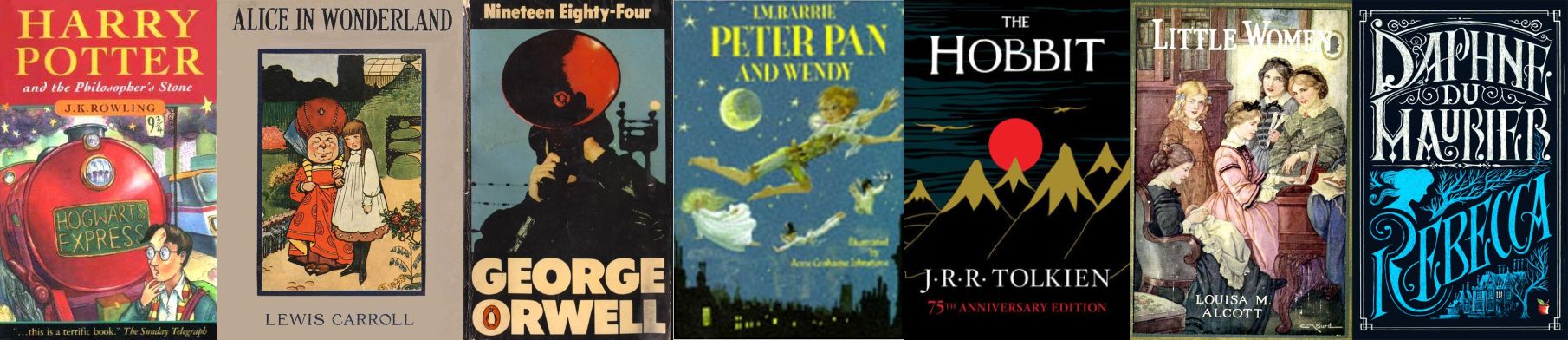
Here are some of my favourite first lines from famous books:
Mr. and Mrs. Dursley, of number four, Privet Drive, were proud to say that they were perfectly normal, thank you very much. (JK Rowling, Harry Potter and the Philosopher’s/Sorcerer’s Stone)
In a hole in the ground there lived a hobbit. (JRR Tolkien, The Hobbit)
Last night I dreamt I went to Manderley again. (Daphne du Maurier, Rebecca)
It was a bright cold day in April, and the clocks were striking thirteen. (George Orwell, Nineteen Eighty Four)
Alice was beginning to get very tired of sitting by her sister on the riverbank, and of having nothing to do: once or twice she had peeped into the book her sister was reading, but it had no pictures or conversations in it, ‘and what is the use of a book’, thought Alice, ‘without pictures or conversation?'(Lewis Carroll, Alice in Wonderland)
Marley was dead, to begin with. There is no doubt whatever about that. (Charles Dickens, A Christmas Carol)
‘Christmas won’t be Christmas without any presents,’ grumbled Jo, lying on the rug. (Louisa May Alcott, Little Women)
All children, except one, grow up. (JM Barrie, Peter Pan and Wendy)
I could go on 😊 of course but I won’t! What I want to focus on is why those lines work so well.
Firstly, no matter what time period they come from, they immediately put the reader straight into the world of the book. The world can be familiar in feel, like Little Women; or disorienting, like 1984 or magical, like The Hobbit; or surprising, like Peter Pan; but in each, straight away you get a pleasurable, intriguing hint of what might be coming. You know straight away that Mr and Mrs Dursley are about to get the shock of their lives; that things have not gone well for the narrator of Rebecca; that there’s a ghost lurking in A Christmas Carol, and that Alice is definitely not going to stay bored. You just don’t know the how and why–and you can’t wait to find out! In those sharply evocative, intriguing opening lines, the authors have got our attention as readers right away, no matter what age we are. Adults are no different to children when it comes to that. The other thing to note is that these first lines are often short (except for the Alice quote!) and always direct, with a great simplicity and clarity. They feel effortless, though in fact the author may well have slaved over them. They have a certain musicality, too, in my opinion: they strike the reader’s eye, yes, but also her ear. You can imagine the words sounding in your head, bright and clear and making you sit up and take notice. In short, they beautifully display the storyteller’s gift in microcosm.
And those, I think, are the important things to remember in our own creation of first lines for our work. Whether they come to us quickly or slowly, whether we are writing for adults or children, and whatever genre we are writing in, those qualities of instant immersion, simplicity, clarity and intrigue are absolutely crucial to the success of first lines, and thus our work’s first impression on the reader. Of course we then have to follow a killer first line up with a fantastic story full stop; but it’s my theory, based on my own experience, that the creation of a great first line is often the key to unlocking the creative flow.
Over to you: what’s your view on first lines, both as readers and writers? What are your own favourites, and why?

Born in Indonesia of French parents, and brought up in France and Australia, Sophie Masson is the award-winning author of over 70 books for children, young adults and adults. Her latest books include Sydney under Attack (children’s historical novel, Scholastic Australia, 2022) A Hundred Words for Butterfly (adult novella, ES-Press, 2022) and Cock-a-doodle-doo (children’s picture book, (illustrated by Kathy Creamer, little Pink Dog Books, 2022). In 2019, Sophie received an AM (Member, General Division) award in the Order of Australia honours list.


My favorite comes from Seveneves by Neal Stephenson, “The moon exploded suddenly and for no apparent reason.” It launches the book with a rocket as humanity scrambles to save itself.
That is indeed one that goes off with a bang!
Such good advice, Sophie, and so timely for me. My WIP is narrative nonfiction based on scrupulous historical research, and I am always mindful of the need to keep it from sounding academic and dry. For the past several days I’ve been brooding over the first paragraph: how to make it stunning (no, that’s not too ambitious), how to give my readers a wonderful reading experience while remaining faithful to the sources. Now you tell me that that much-to-be-desired experience has to start with the first sentence. I’ll sign off now and go spend some quality time with Sentence One. Thanks!
Thanks, Anna, and good luck with it!
Simple and direct. So true. For all of us this is a great reminder to place the reader knee deep into our character and/or plot. Stephen King’s IT was another good one too.
I love this idea so much I’ve given presentations on it! What a terrific way to introduce a free write, because the audience gets a sense of the range that opening lines can cover and then dive in to practice while the iron is hot.
I used several of the same ones you has as examples, and here’s just one more:
There was once a boy named Eustace Clarence Scrubb and he nearly deserved it- C.S. Lewis
Ah yes, that’s a wonderful one!
Excellent advice, and of course just plain fun to read.
However, I have to put in a word for the opposite approach as well: if the first line doesn’t seem to be gelling yet, you can use a throwaway or an outright blank until you’ve written the rest of the story.
A worthy first line is so important, it’d be a pity to think you *have* to write it before you’ve gotten to know the story. (Or worse, hold up a promising tale because you’re waiting for that One Line.) Let the first line inspire the story, or writing the story inspire the first line– whichever comes first.
Very true of course Ken–that killer first line can come to one later: the ‘placeholder’ first line is a good strategy to avoid the terror of beginnings :-)
I agree! Have you read Albert Camus’s The Plague? In it, there is a character who has spent twenty years writing and rewriting the opening line of what is going to be the best novel ever written. Except he’s never writt n anything beyond that line…
Great article! I wish it weren’t so true, as it adds to the whole terror of writing a opening that sucks the reader in instantly. But — it also forces the author to look at their novel like being buried in the sand with only eyes showing. What would make anyone notice you, lying there, buried in the sand? The color of your eyes? Rapid blinking?
I’m guilty of reading the first line, when checking out a book to buy. If the first line snags me, I’ll likely make the purchase on that interest alone. If the first line flops, I’ll read 2 more sentences. If those flop, back on the shelf it goes.
Now you’ve got me thinking about checking the first lines of all my favorite books…
Maria,”What would make anyone notice you, lying there, buried in sand, with only the eyes showing?” Sounds like a perfect opening line to me!
Absolutely–brilliant! Would love to read that book :-)
It’s a fun game, checking those first lines…but as you say can be scary when it’s you creating them!
Sophie–Thanks for your post. This would make for a good ongoing series: how do we see unifying principles at work in successful openings, and: how often do books that succeed start with something less than opening lines that create “instant immersion, simplicity, clarity and intrigue”? I absolutely agree with your observation about musicality figuring in successful openings.
But one other thing: “our work’s first impression on the reader” isn’t the first line of the prologue or opening chapter. It’s the book’s title, and cover art, and then probably the book description on the back. If these three elements “work,” the reader will now get to that opening line.
Thanks again for your post.
Thanks, Barry.
Yes, would be interesting to look at how stories develop from first lines and whether they all live up to their promise. The examples I chose are all from books that have endured of course…would be interesting to look in the same way at those that have been more ephemeral or are currently popular.
And of course you’re right, first impression is the cover and blurb etc but that is something that is more in the hands of the publisher than the writer(though of course these days that can be one and the same).
Many of the examples are from older books where such a beginning with a somewhat omniscient narrator was common practice (It was the best of time– no one in the book is actually saying this, of course) When I put this in my WIP I got pushback from editors to just start with my character and stop setting the scene. Different strokes/different folks.
My favorite is Fowler’s line from “We Are All Totally Besides Ourselves” “Those who know me now will be surprised to learn that I was a great talker as a child.” And another that I noted but didn’t mark down the attribution “When they first came into the country it was wet and raining and if they had known of the droughts that lasted seven years at a time, they might never have stayed.”
Those are great first lines too! (though maybe in the second one they should have taken out ‘wet’?? )
For efficiency, yes–but “wet” adds to the musicality!
How about that wonderful, lyrical line from Isek Dinesen’s Out of Africa? “I had a farm in Africa, at the foot of the Ngong Hills.” (Of course, I also hear Meryl Strep’s voice as Karen Blixen .)
It’s hard to beat “Call me Ishmael” (Moby Dick) for directness, or the seduction of the line, “First the colors.” from Markus Zusak’s The Book Thief.
Like Sophie, I love the opening from “Rebecca,” and on reading this am reminded again of the importance of an opening sentence with impact, simplicity, and promise.
Thank you.
Enjoyed the article, Sophie, especially reading all those first lines … most of them are favourites of mine too. Not many books have memorable lines, in my opinion, but when they do I get a rush of pleasure at the thought of what awaits me if I read on.
When I write first lines, sometimes they require many changes over the course of the editing process, but sometimes they are there like shining beacons right from the start, spurring me on with a sureness of what I must fulfill. 😊
Such was the first line in my upcoming new children’s novel, Sweet Adversity. … It was a good day to break a bad rule.
I love this!
The first line that springs to me isn’t of a book, it’s an album (if you’ll forgive me).
“This will be an uncertain time for us, my love.” – Waiting for the Sun by Powderfinger on Odyssey Number Five
Setting the stage perfectly and intriguingly.
Of course, as with many other things, “name” writers can completely ignore this and still have agents queuing up to publish them. Example:
‘Jack Reacher and Michelle Chang spent three days in Milwaukee.’
Yes, it sucks, but Lee Child is worth $ millions.
Two particular favorites of mine:
“The story so far: in the beginning the Universe was created. This has made a lot of people very angry and been widely regarded as a bad move.” (The Restaurant at the End of the Universe, Douglas Adams)
“You are about to begin reading Italo Calvino’s new novel, If on a winter’s night a traveler.” (If On a Winter’s Night a Traveler, Italo Calvino)
In April the clocks were striking 13, but in May they were striking for better wages. Not even clocks want to work 13-hour days.
What about this one: “When the storm came, it hit the hills like a hammer.” (The Wintersmith, Terry Pratchett)
And yes, absolutely guilty of reading the first few lines of a book … and, shame on me, I also love to read the last line!
My favourites are, from a thriller:
“”You’re a spoiled, bad-tempered bastard,” my sister said, and jolted me into a course I nearly died of.” Flying Finish by Dick Francis.
That sets it up as a story involving danger, certainly. And maybe a little bad language.
And from a children’s story :
“May Fortune preserve you, gentle reader, may your days be filled with constant joys, and may my story please you, for it has no other purpose.” The Land of Green Ginger by Noel Langley
which tells you to just sit back and enjoy it, and also sets the scene in an Arabian Nights style fairy tale.
Last night I dreamt I went to Manderley again. (Daphne du Maurier, Rebecca) — this is my all time favorite first line! So glad to see it is one of yours as well. I was delighted when my debut novel won a First Line contest! “The breath of the passengers created a layer of condensation on the windows of the plane obscuring his view of the city.” I will rethink the first line of my WIP a dozen more times before I settle on it.